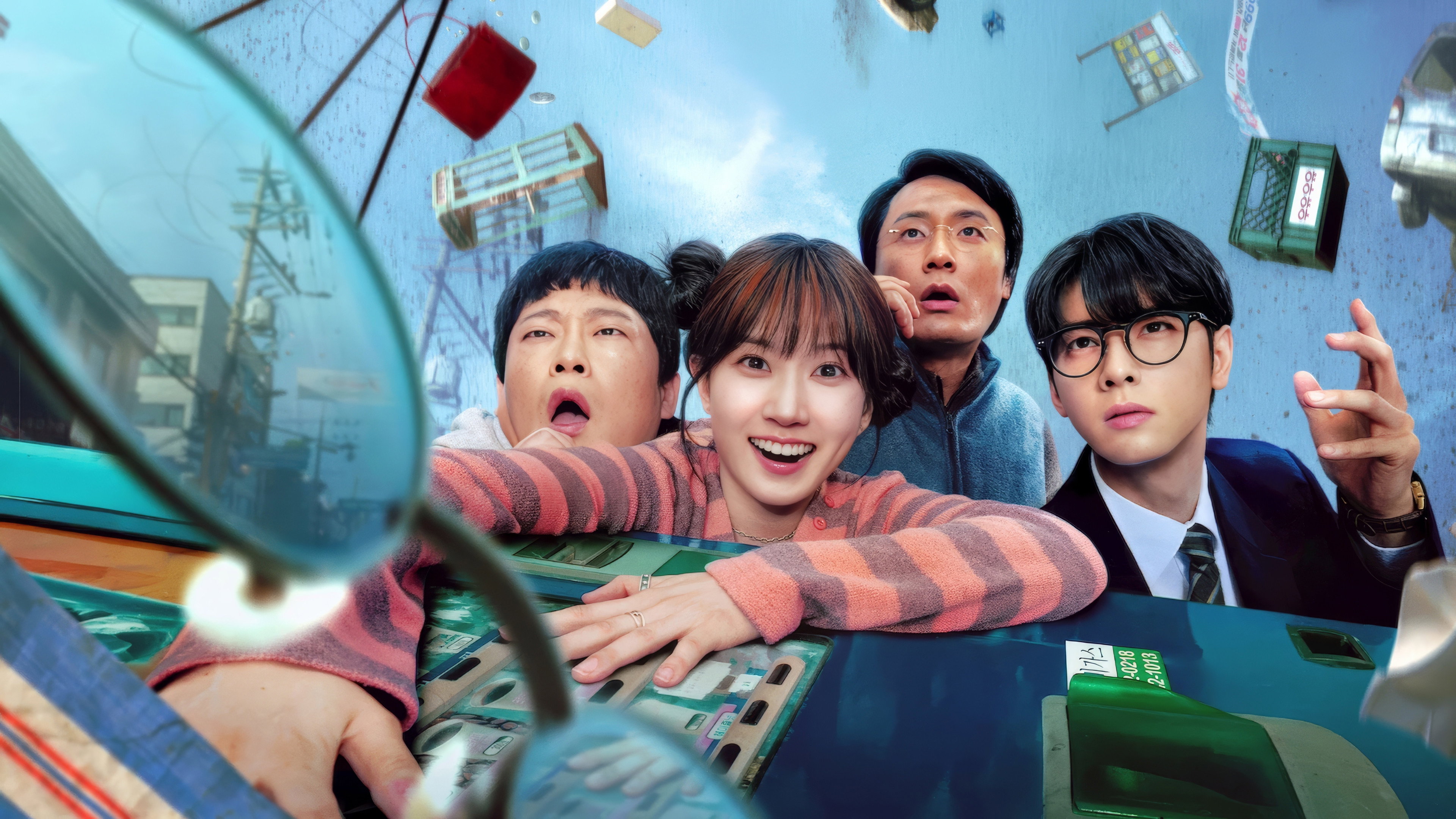
“Zero skills. Maximum chaos.”
The Accidental Pantheon: "The WONDERfools" and the Evolution of the Superhero Trope
In an era saturated with caped crusaders and meticulously crafted cinematic universes, the Netflix original series The WONDERfools, which premiered on May 15, 2026, sought to carve its own niche by embracing the inherently chaotic and often absurd nature of accidental heroism. Created by the collaborative vision of Kang Eun-kyung, Yoo In-sik, and Huh Dah-joong, this single-season, eight-episode offering positioned itself as a "wild, turn-of-the-century action comedy," promising a refreshing departure from the genre's more earnest iterations. Its premise—a "goofy group of townies stumbles into superpowers and fights rising evil as doomsday panic grows"—immediately signals a blend of irreverent humor, high-stakes fantasy, and a distinctly human core.
The series, categorized under Action & Adventure, Comedy, Sci-Fi & Fantasy, and Drama, aimed for a broad appeal, suggesting a narrative tapestry woven with diverse threads. With each episode clocking in at a substantial 80 minutes, The WONDERfools presented an ambitious format for its contained story. The tagline, "Zero skills. Maximum chaos.," served not just as a marketing hook but as a thematic declaration, setting expectations for a journey less about polished heroism and more about the endearing, often hilarious, struggles of ordinary individuals thrust into extraordinary circumstances. As a completed series, its brief but impactful run invites a holistic analysis of how it navigated its ambitious genre-bending and character-driven premise.
Crafting a World on the Brink: World-Building and Format in "The WONDERfools"
The world of The WONDERfools is defined by a fascinating temporal and thematic juxtaposition. Described as a "turn-of-the-century" setting, the series immerses viewers in an environment that likely evokes the anxieties and nascent technological shifts of the early 2000s—a period ripe for "doomsday panic" as the millennium turned. This choice of era is crucial for its world-building, suggesting a pre-ubiquitous internet age where information might spread through local rumor and television bulletins, amplifying a sense of isolated, community-level dread. The "goofy group of townies" at its heart would feel the encroaching global threat in a deeply personal, localized way, grounding the fantastical elements in a relatable, if slightly anachronistic, reality. The visual and atmospheric implications of this setting—perhaps a blend of nostalgic aesthetics with burgeoning Y2K paranoia—would be central to establishing its unique identity.
The presence of "rising evil" and the pervasive "doomsday panic" are not mere plot devices but integral components of the world itself. This isn't a world where superheroes are an established concept; rather, it's one where the sudden emergence of "stumbled into superpowers" would be met with confusion, fear, and perhaps even more panic. The tension between the mundane lives of the townies and the cosmic threat they confront creates a rich narrative vein. How this "rising evil" manifests—whether as a tangible force, a supernatural phenomenon, or a societal breakdown—would dictate the tone and scope of the world's peril. The series' commitment to blending Action & Adventure with Sci-Fi & Fantasy suggests a world where the fantastical intrudes violently upon the everyday, forcing its inhabitants to adapt or perish.
The series' format, a single season of eight 80-minute episodes released on Netflix, significantly shapes its world-building. The extended runtime per episode allows for a more deliberate unfolding of its universe, potentially delving deeper into the mechanics of the powers, the nature of the "rising evil," and the societal impact of the "doomsday panic." This could enable creators Kang Eun-kyung, Yoo In-sik, and Huh Dah-joong to build a nuanced backdrop, fleshing out the town, its inhabitants, and the specific cultural anxieties of its "turn-of-the-century" setting. However, it also presents a challenge: maintaining narrative density and engagement across such long installments. The "wild" aspect of the action comedy implies a world that can shift tonally and structurally, embracing both the absurd and the genuinely dramatic. The confluence of these genres—Action, Comedy, Sci-Fi, Fantasy, and Drama—suggests a world capable of accommodating broad emotional swings, from slapstick antics to moments of profound despair, all within a rapidly deteriorating global context.
The Accidental Heroes: Character Arcs and the Ensemble Cast
At the core of The WONDERfools lies its ensemble of "goofy townies," whose transformation from ordinary citizens to unlikely saviors forms the bedrock of its character arcs. The premise hinges on individuals who "stumble into superpowers," immediately establishing a dynamic of reactive heroism rather than proactive destiny. This accidental acquisition of abilities is crucial, as it suggests an initial struggle with unfamiliar powers, personal insecurities, and the sheer absurdity of their new roles. The tagline, "Zero skills. Maximum chaos.," perfectly encapsulates their starting point, promising a journey of chaotic fumbling before any semblance of competence is achieved.
The main cast brings this concept to life with a diverse range of presumed personalities. Park Eun-bin as Eun Chae-ni, Cha Eun-woo as Lee Un-jeong, Choi Dae-hoon as Son Gyeong-hun, Im Sung-jae as Kang Ro-bin, and Kim Hae-sook as Kim Jeon-bok form the unlikely quintet. Their individual arcs would undoubtedly explore how each character grapples with their newfound abilities and the escalating "doomsday panic." Eun Chae-ni, perhaps the pragmatic leader, might struggle with the weight of responsibility. Lee Un-jeong could represent the youthful, impulsive energy, learning discipline amidst the chaos. Son Gyeong-hun might be the reluctant hero, forced out of his comfort zone, while Kang Ro-bin could be the eccentric genius or the group's comedic relief. Kim Jeon-bok, potentially the elder stateswoman of the group, might offer wisdom or unexpected strength. The "Drama" genre tag ensures that beneath the action and comedy, there are genuine emotional stakes and personal growth, as these characters confront not only external evil but also their own fears and limitations.
The strength of The WONDERfools likely resides in the interplay between these distinct personalities. Their "goofy" nature suggests a foundation built on comedic misunderstandings, awkward power usage, and the forging of improbable friendships. The character arcs would track their evolution from individuals overwhelmed by circumstance to a cohesive, albeit still chaotic, unit. This isn't about becoming flawless heroes but about embracing their imperfections and finding strength in their collective, unskilled chaos. The narrative would explore how their unique quirks and prior lives as "townies" inform their approach to fighting "rising evil," perhaps leading to unconventional solutions born from their very lack of traditional heroic training. The series would likely celebrate the spirit of the underdog, demonstrating that even with "zero skills," the will to protect one's community and loved ones can lead to extraordinary, if messy, feats.
The Rhythmic Unfolding: Narrative Pacing Across Seasons and Episodes
The narrative pacing of The WONDERfools is inherently shaped by its unique structural constraints: a single season comprising eight episodes, each a substantial 80 minutes in length. This setup dictates a specific rhythm, demanding both efficiency and breadth in storytelling. On an overarching seasonal level, the pacing must be remarkably tight. Within eight episodes, creators Kang Eun-kyung, Yoo In-sik, and Huh Dah-joong had to introduce a "goofy group of townies," establish their "stumbled into superpowers," define the "rising evil," articulate the "doomsday panic," and bring the entire narrative to a conclusive end. This implies a brisk, yet deliberate, escalation of stakes and character development, ensuring that no episode feels like filler. The "Ended" status suggests a complete, self-contained arc, meaning the season's pacing would build towards a definitive climax and resolution, rather than leaving threads open for future installments.
The 80-minute runtime per episode is a particularly defining characteristic of the series' pacing. This extended length offers both opportunities and challenges. On one hand, it allows for a more expansive exploration of the world-building, character dynamics, and intricate plot developments. Each episode could potentially function as a mini-movie, integrating multiple subplots, extended action sequences, and deeper dives into the emotional struggles of the main cast. This could be crucial for balancing the five distinct genres—Action & Adventure, Comedy, Sci-Fi & Fantasy, Drama—without feeling rushed or disjointed. A longer runtime permits the comedic beats to land, the dramatic moments to resonate, and the fantastical elements to be thoroughly established, preventing tonal whiplash.
However, such a lengthy episode also risks narrative bloat or a loss of momentum if not skillfully managed. The pacing within each 80-minute block would need to be meticulously crafted, employing peaks and valleys of intensity. The "wild" aspect of the action comedy suggests an unpredictable pace, perhaps with rapid shifts between high-octane sequences, moments of character introspection, and bursts of slapstick humor. The "doomsday panic" element would likely serve as a constant, underlying accelerator, ensuring that even during comedic lulls, the overarching threat maintains a sense of urgency. The challenge for The WONDERfools would be to leverage this extended canvas to deepen its world and characters, rather than simply stretching out its plot, ensuring that the "maximum chaos" is delivered with a controlled, engaging rhythm that justifies each minute of its substantial run.
Verdict: Maximum Chaos, Measured Impact
The WONDERfools stands as an intriguing, albeit brief, entry into the crowded landscape of superhero narratives. Its greatest strengths lie in its audacious premise and genre-bending ambition. The concept of "goofy townies" accidentally acquiring powers and facing "rising evil" amidst "doomsday panic" is inherently compelling, offering a fresh, grounded, and often humorous take on the hero's journey. The "turn-of-the-century" setting provides a unique backdrop, allowing for a distinct aesthetic and a specific flavor of societal anxiety that sets it apart from contemporary superhero fare. The ensemble cast, featuring talents like Park Eun-bin, Cha Eun-woo, Choi Dae-hoon, Im Sung-jae, and Kim Hae-sook, promises dynamic character interactions and performances capable of navigating the series' complex tonal shifts between comedy, action, and drama. Furthermore, the self-contained, eight-episode structure is a strength for viewers seeking a complete narrative arc without the commitment of multi-season investment.
However, the series is not without its potential weaknesses. The most significant challenge lies in the ambitious 80-minute runtime for each episode. While offering scope for depth, it demands exceptional pacing and narrative density to sustain audience engagement across such extended periods. Balancing Action & Adventure, Comedy, Sci-Fi & Fantasy, and Drama within each long installment could lead to tonal inconsistencies or a diluted focus if not expertly executed. There's a risk that the "goofy" elements might overshadow the dramatic stakes, or conversely, that the "doomsday panic" might undermine the comedic potential. The "Zero skills. Maximum chaos." tagline, while endearing, also hints at a narrative tightrope walk: ensuring that the characters' lack of skill evolves into something meaningful rather than remaining perpetually inept, which could wear thin over 80 minutes.
Ultimately, The WONDERfools is a series for viewers who appreciate genre fusion and a more whimsical, character-driven approach to the superhero trope. It is ideal for those who enjoy ensemble casts, narratives centered on ordinary people thrust into extraordinary circumstances, and stories that conclude within a single, focused season. Fans of lighthearted action-comedies with an underlying dramatic current, particularly those with a nostalgic appreciation for "turn-of-the-century" anxieties, will likely find much to enjoy in its "wild" and chaotic charm. Those seeking gritty realism or a conventional superhero origin story might find its unique blend too unconventional. For its specific audience, however, The WONDERfools offers a delightful, if messy, journey into accidental heroism.
Keep Reading
Television → Television · 2005
Criminal Minds
An elite team of FBI profilers analyze the country's most twisted criminal minds, anticipating their next moves before they strike again. T…
Read analysis → Television · 2000
CSI: Crime Scene Investigation
A Las Vegas team of forensic investigators are trained to solve criminal cases by scouring the crime scene, collecting irrefutable evidence…
Read analysis → Television · 1999
Family Guy
Sick, twisted, politically incorrect and Freakin' Sweet animated series featuring the adventures of the dysfunctional Griffin family. Bumbl…
Read analysis → Television · 2010
Running Man
These days, as variety shows are gradually disappearing, this is one of Korea’s representative variety shows that has been responsible for…
Read analysis →