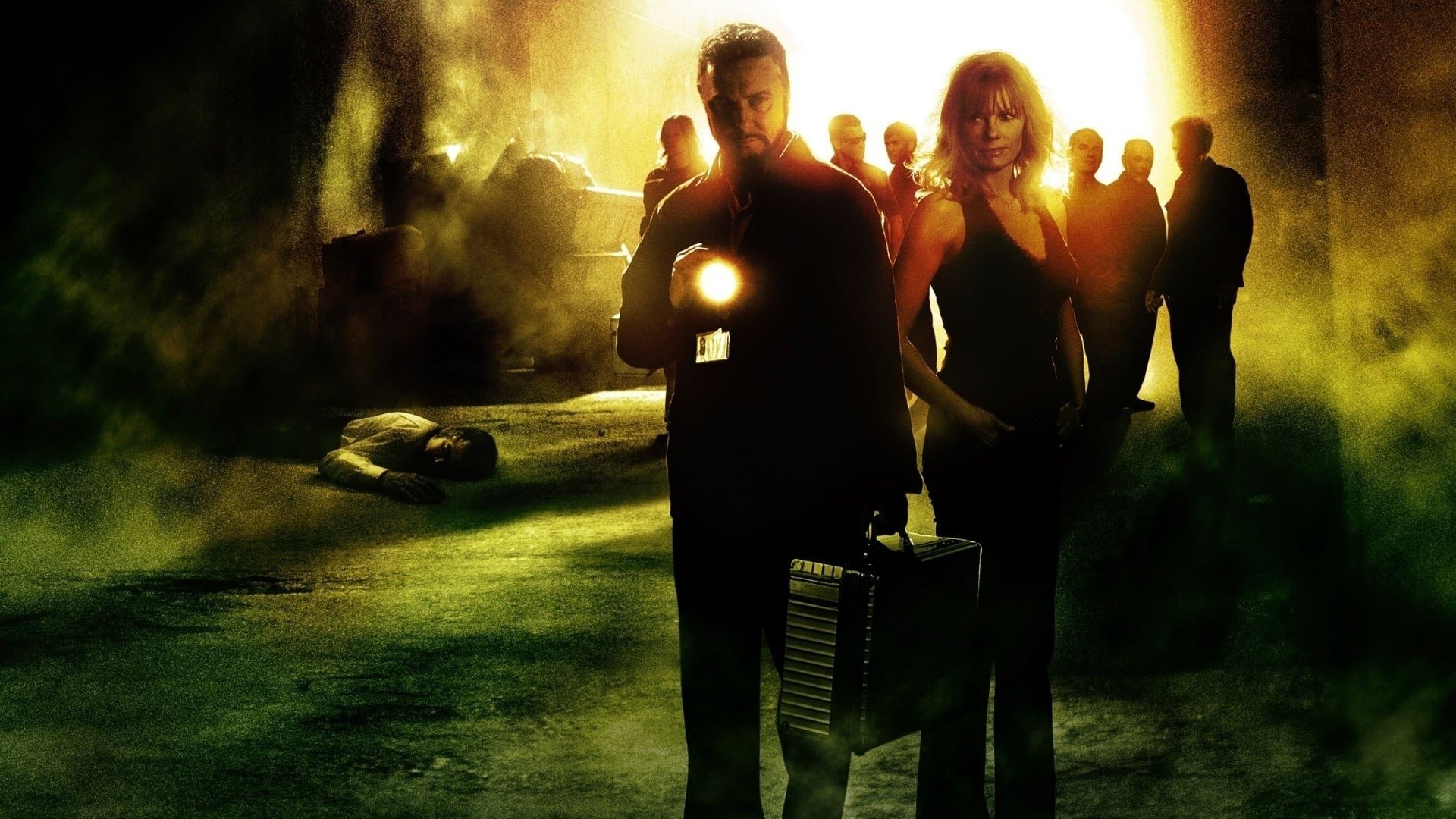
CSI: CRIME SCENE INVESTIGATION
Archive Entry No. 2000-PR
The Anatomy of the Neon Grave: A Retrospective on CSI: Crime Scene Investigation
When CSI: Crime Scene Investigation debuted on October 6, 2000, it did not merely capture the cultural zeitgeist; it engineered a profound paradigm shift in the television landscape. At a time when the police procedural was dominated by the gritty realism of street-level detectives and courtroom dramatics, creator Anthony E. Zuiker looked through a microscope and found a universe. By elevating forensic science from a background utility to the central protagonist, CSI redefined the epistemology of the television mystery, suggesting that while humans may lie, the physical world remains incorruptibly honest.
The Microscopic Metropolis: World-Building in the Neon Desert
The world-building of CSI is anchored in a brilliant thematic juxtaposition: the glittering, hyper-capitalist excess of Las Vegas set against the cold, sterile, and clinical environment of the forensics laboratory. Las Vegas is not merely a backdrop; it is an active antagonist, an ecosystem of vice, desperation, and entropy. The series constructs a liminal space where the American Dream goes to die, illuminated by neon lights and dissected under harsh fluorescent bulbs.
Visually, the show pioneered a distinct aesthetic vocabulary. The iconic "CSI shot"—a CGI-rendered, hyper-realistic journey inside the human body to witness the trajectory of a bullet or the rupture of an organ—was a masterstroke of world-building. It expanded the narrative canvas to the cellular level. The crime scene was no longer just a room; it was a text to be read, where dust motes, fiber transfers, and insect pupae carried the weight of tragic human narratives.
The Monks of the Microscope: Character Arcs and Secular Devotion
At the heart of this forensic universe is Gil Grissom, portrayed with magnificent, understated intellect by William Petersen. Grissom is the secular monk of the laboratory, an entomologist whose detachment from human folly is matched only by his profound reverence for the natural world. His character arc is one of slow, reluctant humanization. He begins as a man who prefers the company of bugs to people, but through his quiet mentorship of his team and his eventual, deeply repressed romance with Sara Sidle, he slowly reconciles his scientific objectivity with human empathy.
The supporting ensemble functions as a prism, reflecting different facets of the human condition. Catherine Willows, a former strip-club dancer turned blood-spatter analyst, provides a vital, street-smart counterweight to Grissom’s academic isolation. Her arc is one of hard-won legitimacy and class mobility. Meanwhile, the tragic trajectory of Warrick Brown, battling gambling addiction in the very city that feeds it, and the earnest, boyish evolution of Nick Stokes, offer a poignant look at the psychological toll of staring daily into the abyss. These characters do not experience radical, soap-operatic transformations; rather, their growth is incremental, shaped by the steady, eroding drip of the horrors they investigate.
The Rhythm of the Autopsy: Narrative Pacing and the Procedural Engine
The narrative pacing of CSI is a masterclass in procedural efficiency. The series perfected the dual-narrative structure, typically splitting the team into two units to solve an "A-plot" and a "B-plot" simultaneously. This technique kept the pacing brisk, preventing the dense scientific jargon from overwhelming the viewer. The rhythm of an episode mimics the scientific method itself: observation, hypothesis, experimentation, and conclusion.
In its golden era, the show balanced episodic self-containment with serialized dread. While viewers were guaranteed a resolution within forty-five minutes, the show masterfully seeded long-term threats—most notably the Miniature Killer arc in season seven. This storyline disrupted the show's established pacing, turning the forensic tools of the investigators against them and challenging their fundamental belief in their own omniscience. By slowing down the narrative engine to a agonizing crawl, the series proved it could generate profound psychological suspense just as easily as it did rapid-fire intellectual satisfaction.
Ultimately, CSI: Crime Scene Investigation succeeded because it understood that every corpse tells a story. Through its meticulous world-building, restrained character development, and clockwork pacing, it transformed the morbid into the beautiful, and the clinical into the deeply human.