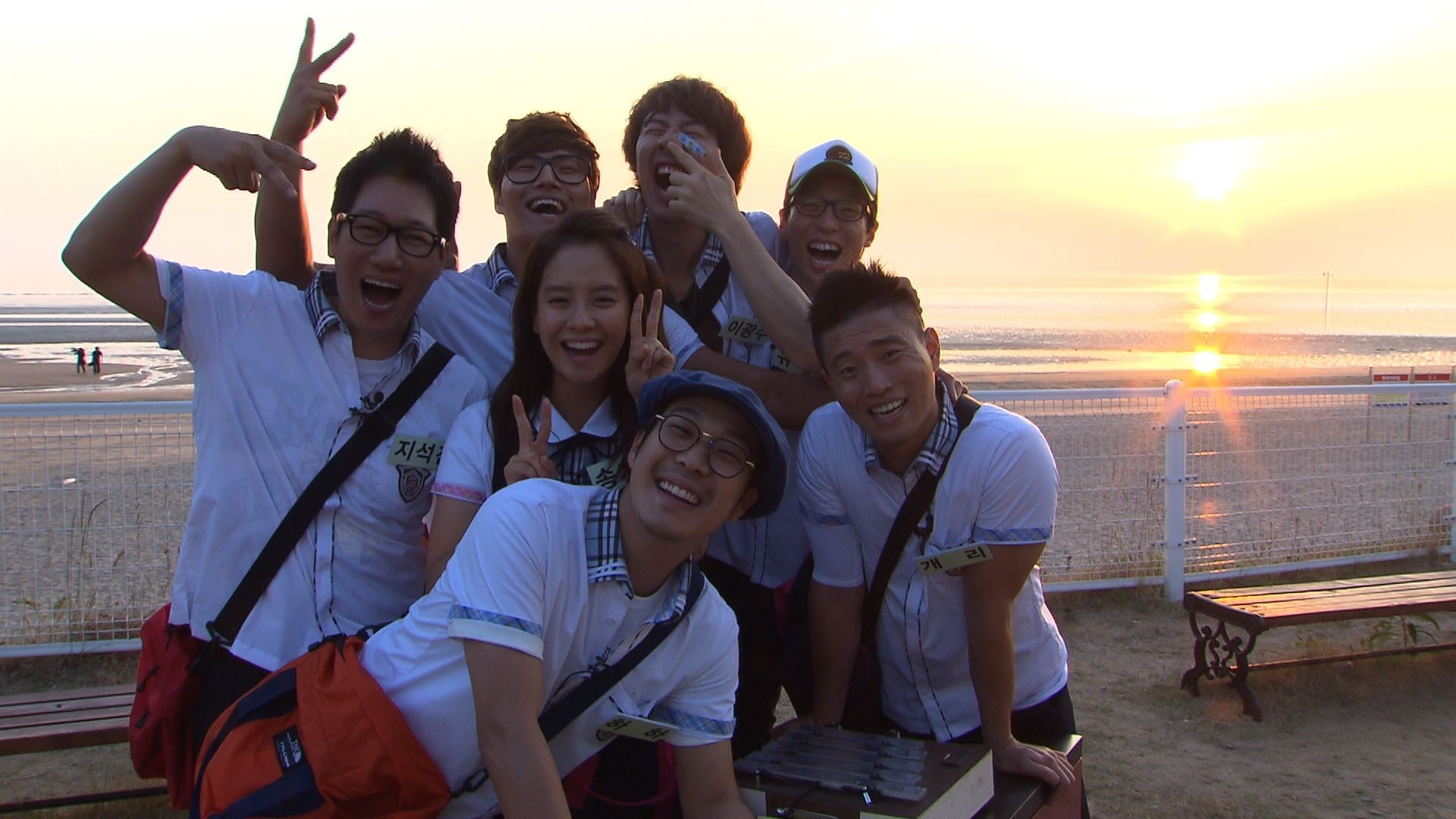
“Don't Walk, Run!”
The Enduring Marathon of "Running Man": A Television Phenomenon
In an era where the landscape of television variety shows is often characterized by fleeting trends and rapid turnover, SBS's Running Man stands as a remarkable testament to longevity and sustained appeal. Premiering on July 11, 2010, this Korean reality-comedy series has not merely occupied Sunday evenings for over a decade; it has defined them for a significant segment of the global audience. Positioned as one of Korea's representative variety shows, Running Man distinguishes itself through a seemingly simple yet profoundly effective premise: a core cast and numerous guest stars navigate various locations, engaging in games and completing missions. The stated objective is singular and unwavering: to deliver laughter. This commitment to pure comedic entertainment, encapsulated by its promotional lines – "Open your eyes! Big fun is coming in! Open your mouth! Big laughter is coming in! Open your heart! Useful lessons are coming in!" – and its energetic tagline, "Don't Walk, Run!", firmly establishes its place as a cornerstone of modern Korean television, a vibrant, continuous spectacle in a genre often struggling for endurance.
Constructing a Playful Reality: World-building and Format in Motion
For a reality-comedy series like Running Man, the concept of "world-building" transcends traditional fictional narratives, manifesting instead as the meticulous construction of a consistent, dynamic, and ever-evolving playground. The architects of this unique universe include a formidable team of creators: Jo Hyo-jin, Kim Joo-hyung, Lim Hyung-taek, Jung Chul-min, Lee Hwan-jin, Choi Bo-pil, Choi Hyung-in, and 강형선. These individuals have crafted a reality where the rules of engagement, while adapted weekly, remain fundamentally rooted in competition, strategy, and comedic improvisation. The "world" of Running Man is not a static locale but a fluid tapestry woven from countless real-world settings – "various places" that serve as the backdrop for its episodic missions. From bustling urban centers to serene natural landscapes, each location is transformed into a temporary arena, imbued with specific tasks and challenges that create a self-contained narrative universe for 85 minutes.
The format of Running Man is crucial to its world-building. Operating as a "Returning Series" with an astonishing 828 episodes contained within a single, continuous "season," it eschews traditional seasonal breaks and resets. This unbroken run fosters a deep sense of continuity, allowing the "world" to evolve organically. The rules of the games, while diverse, often share common threads – elements of chase, hide-and-seek, physical challenges, and intellectual puzzles – establishing a recognizable framework. This consistent yet adaptable structure creates a predictable unpredictability; viewers know the general parameters of the "world" they are entering, but the specific challenges and comedic outcomes are always fresh. The emphasis on "games" and "missions" provides the narrative spine for each episode, creating mini-worlds of competition and camaraderie that, over time, coalesce into a vast, intricate, and deeply familiar comedic cosmos.
The Long-Distance Runners: Character Arcs and the Main Cast
In a series where the main cast members portray "Self," the concept of "character arc" takes on a unique dimension, diverging from the dramatic transformations of fictional roles. Instead, the arcs in Running Man are defined by the organic evolution of public personas, the deepening of interpersonal relationships, and the establishment of enduring comedic dynamics over more than a decade. The core ensemble – Yu Jae-seok, Jee Seok-jin, Kim Jong-kook, Haha, and Song Ji-hyo – have, through their continuous participation, developed multifaceted on-screen identities that are both authentic and performative. Their longevity together has allowed for the slow, subtle etching of individual quirks, rivalries, and solidarities into the fabric of the show.
Yu Jae-seok, as the central figure, embodies the role of the master facilitator, his quick wit and leadership often guiding the chaotic energy of the missions. His "arc" is one of consistent adaptability and unwavering professionalism, maintaining the show's comedic rhythm. Jee Seok-jin's journey often involves embracing a role of comedic vulnerability, his struggles and triumphs providing relatable humor. Kim Jong-kook's persona as the formidable competitor, juxtaposed with moments of unexpected tenderness, has evolved into a cornerstone of the show's competitive dynamic. Haha's mischievous and playful energy consistently injects a youthful, unpredictable element into the proceedings, his "character" thriving on comedic improvisation. Song Ji-hyo, often portrayed as the pragmatic and observant member, provides a grounded counterpoint to the more boisterous personalities, her quiet determination frequently leading to surprising victories. These "characters" are not static; they are continually shaped by the challenges, the guests, and, most importantly, by each other. The cumulative effect of hundreds of episodes is a rich tapestry of genuine camaraderie, playful antagonism, and shared experiences, making their interactions the true heart of the show's enduring appeal. The integration of "numerous stars" as guests further tests and refines these established dynamics, forcing the main cast to continually adapt and redefine their roles within the ever-shifting group.
The Unbroken Sprint: Narrative Pacing Across Episodes and Seasons
The narrative pacing of Running Man is intrinsically linked to its extraordinary structural characteristic: a single, continuous "season" encompassing 828 episodes and counting. This eschews the traditional ebb and flow of seasonal arcs, opting instead for an unrelenting, episodic sprint. Each 85-minute installment is a self-contained narrative, beginning with the introduction of a mission, progressing through a series of games and challenges, and culminating in a resolution, often involving a winner or a designated outcome. The pacing within these individual episodes is typically brisk and dynamic, designed to maintain high energy and comedic momentum. Transitions between games are quick, and the challenges themselves often demand physical exertion and rapid decision-making, mirroring the show's tagline, "Don't Walk, Run!" This rapid-fire approach ensures that viewer engagement is sustained through constant shifts in activity and comedic beats.
Across the vast expanse of 800+ episodes, the overarching narrative pacing is one of continuous evolution rather than a pre-planned trajectory. There is no grand plot to resolve, but rather an ongoing chronicle of the cast's journey, their evolving relationships, and the show's own adaptability. The creators – Jo Hyo-jin, Kim Joo-hyung, Lim Hyung-taek, Jung Chul-min, Lee Hwan-jin, Choi Bo-pil, Choi Hyung-in, and 강형선 – have masterfully managed this marathon by consistently introducing new game mechanics, varying locations, and inviting diverse guest stars. This constant refresh prevents stagnation, ensuring that despite the consistent format, each episode offers novel comedic situations. The pacing across the entire series is thus a testament to sustained creativity, balancing the comfort of familiarity with the excitement of novelty, enabling the show to maintain its "returning series" status and continue its impressive run without traditional narrative breaks.
Verdict: A Marathon of Mirth for the Global Audience
Running Man stands as a monumental achievement in television, particularly within the reality-comedy genre. Its primary strength lies in its unwavering commitment to delivering "big fun" and "big laughter," a promise it has consistently fulfilled for over a decade. The show's longevity is a testament to its ingenious format, which, under the guidance of its numerous creators, skillfully blends competitive games with spontaneous comedic interactions. The core cast members – Yu Jae-seok, Jee Seok-jin, Kim Jong-kook, Haha, and Song Ji-hyo – are undeniably the heart of its success, their evolved personas and genuine camaraderie forming a deeply engaging ensemble that viewers have grown to love and follow. The episodic pacing, while relentless, is expertly managed to ensure each 85-minute installment is a vibrant, self-contained burst of entertainment, while the continuous "season" structure allows for a unique, organic development of its "world" and character dynamics.
However, the very nature of such a long-running, continuous series presents inherent challenges. While the show's adaptability is a strength, the sheer volume of episodes could, for some, lead to a perception of structural repetition over time, despite the efforts to introduce new games and scenarios. The reliance on guest stars, while providing fresh dynamics, also means that the quality of comedic output can occasionally hinge on the chemistry and enthusiasm of the week's visitors. Yet, these are minor considerations against the backdrop of its undeniable success.
Ultimately, Running Man is a series that should be watched by anyone seeking consistent, high-energy comedic relief. It is ideal for fans of Korean variety shows, viewers who appreciate the dynamic interplay of an ensemble cast, and those who enjoy lighthearted competition and physical comedy. Its enduring appeal, rooted in its commitment to laughter and its unique blend of reality and entertainment, makes it a vital and cherished component of contemporary television history. It is a show that truly lives up to its promise: a non-stop sprint of fun, laughter, and, perhaps, even a few "useful lessons" along the way.
Keep Reading
Television → Television · 2005
Criminal Minds
An elite team of FBI profilers analyze the country's most twisted criminal minds, anticipating their next moves before they strike again. T…
Read analysis → Television · 2000
CSI: Crime Scene Investigation
A Las Vegas team of forensic investigators are trained to solve criminal cases by scouring the crime scene, collecting irrefutable evidence…
Read analysis → Television · 2026
The WONDERfools
A goofy group of townies stumbles into superpowers and fights rising evil as doomsday panic grows in this wild, turn-of-the-century action…
Read analysis → Television · 1999
Family Guy
Sick, twisted, politically incorrect and Freakin' Sweet animated series featuring the adventures of the dysfunctional Griffin family. Bumbl…
Read analysis →