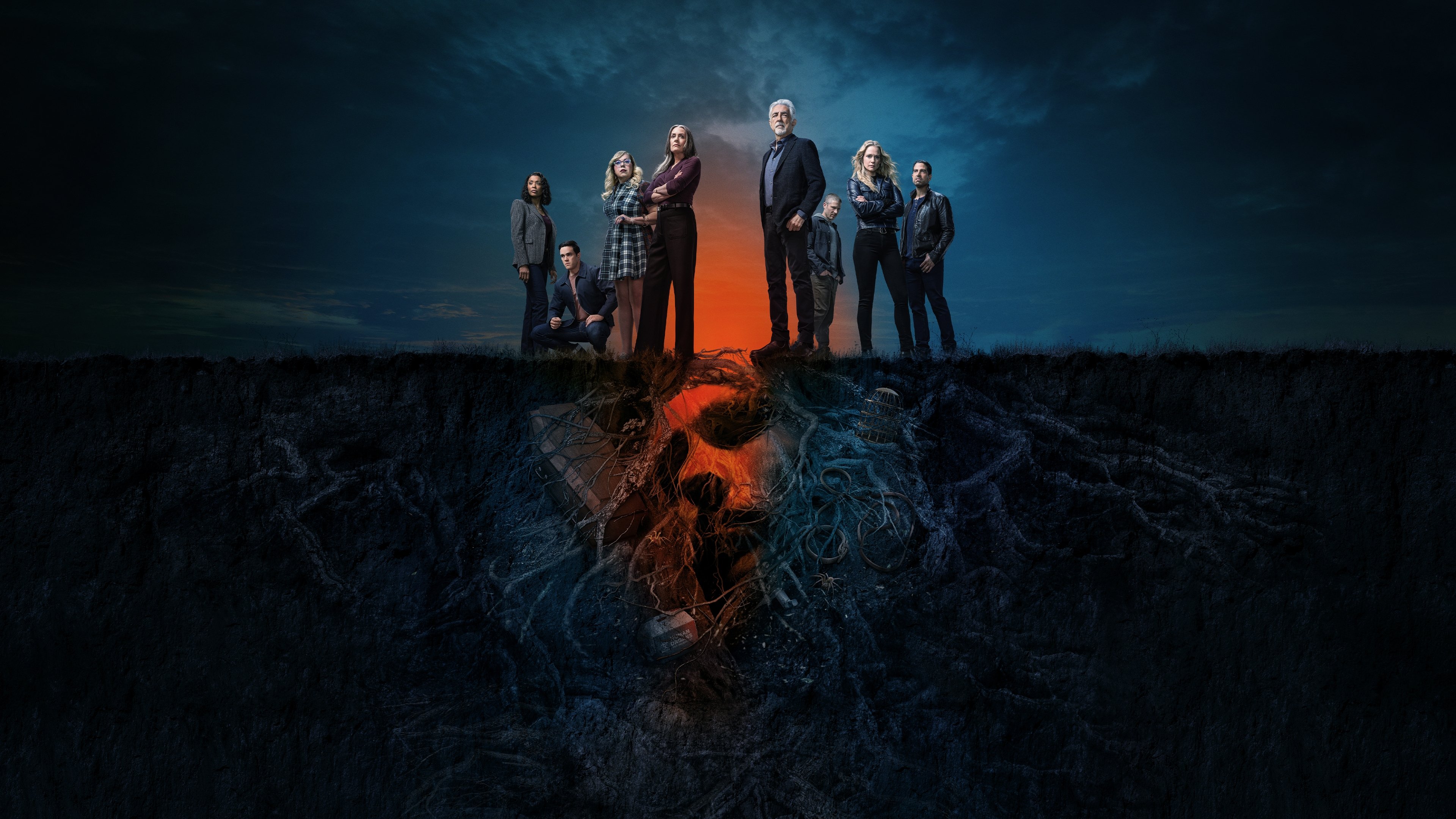
“To catch a criminal, you have to think like one.”
The Enduring Psychology of Evil: A Deep Dive into Criminal Minds
Since its debut on September 22, 2005, Jeff Davis's Criminal Minds has carved a formidable niche in the landscape of network television. A procedural drama that delves into the darkest corners of the human psyche, the series distinguishes itself by focusing not merely on the 'who' or 'how' of a crime, but profoundly on the 'why.' At its core, the show follows an elite team of FBI profilers within the Behavioral Analysis Unit (BAU) as they meticulously dissect the country's most twisted criminal minds, anticipating their next moves before they strike again. This premise, encapsulated by the chillingly apt tagline, "To catch a criminal, you have to think like one," has resonated with audiences for nearly two decades, cementing its status as a cornerstone of modern crime television on CBS and now Paramount+.
In an era often dominated by forensic science (epitomized by the CSI franchise), Criminal Minds pivoted toward behavioral psychology, offering a fresh, albeit often disturbing, perspective. It eschewed the gleaming labs and intricate ballistics for the more abstract, yet equally compelling, terrain of motive, pattern, and psychological profile. This shift allowed the series to explore the origins of malevolence, making the 'unsub' (unknown subject) a character as much as a mystery. Its remarkable longevity, spanning 19 seasons and an astonishing 364 episodes, speaks volumes about its foundational appeal and its ability to consistently deliver compelling, if harrowing, narratives within a well-defined framework. It stands as a testament to the enduring fascination with the human capacity for darkness and the dedicated few who stand against it.
Mapping the Labyrinth: World-Building and Format of the BAU
The world of Criminal Minds is a terrifyingly expansive one, yet paradoxically contained within the confines of the BAU's operations. It is a world where evil is not an abstract concept but a palpable, insidious force that can manifest anywhere, from idyllic suburban homes to desolate rural landscapes. The series' world-building isn't about creating fantastical realms or intricate political systems; instead, it meticulously constructs a reality where extreme violence is a constant threat, and the only bulwark against it is human intellect and empathy. The United States, in this narrative, becomes a vast canvas for serial predation, with the BAU serving as the nation's vigilant, traveling guardians.
The show's format is quintessential procedural, built around the "unsub of the week" structure. Each episode typically commences with a heinous crime, immediately thrusting the BAU team into action. Their "world" is defined by the rapid deployment to diverse crime scenes, the intense, often claustrophobic, profiling sessions in their jet, and the high-stakes interrogation rooms. This constant geographical shift, from bustling metropolises to isolated towns, paradoxically creates a consistent world view: evil is ubiquitous, and the BAU's mission is unending. The show masterfully uses visual cues—dark, atmospheric cinematography for crime scenes contrasted with the sterile, yet familiar, environment of the BAU jet or headquarters—to reinforce this duality.
Crucially, the world-building is deeply intertwined with the show's psychological focus. The 'world' is not just where crimes happen, but where the psychological underpinnings of those crimes are explored. The series frequently delves into the backstories of the unsubs, offering glimpses into the trauma, pathology, or environmental factors that forged their twisted minds. This approach, while often grim, provides a chilling depth to the narrative, suggesting that monsters are made, not born. The BAU office itself, with its familiar faces and routines, acts as a stable anchor, a sanctuary of reason and camaraderie against the relentless tide of depravity they confront daily. It's a world where the internal lives of the profilers, their coping mechanisms and personal sacrifices, become as integral to the narrative as the cases themselves, subtly building a consistent emotional landscape over 19 seasons despite the episodic nature of the threats.
The Human Element: Character Arcs and the Main Cast
In a long-running procedural like Criminal Minds, character arcs often unfold with a subtlety that belies the dramatic intensity of their cases. The strength of the series lies in its ensemble, a collection of distinct personalities whose individual journeys, while rarely explosive, contribute significantly to the team's enduring appeal. The core cast members, including Joe Mantegna as David Rossi, Paget Brewster as Emily Prentiss, Adam Rodriguez as Luke Alvez, Kirsten Vangsness as Penelope Garcia, and A.J. Cook as Jennifer Jareau, have become synonymous with their roles, grounding the show's dark premise with relatable human experiences.
David Rossi, portrayed by Joe Mantegna, serves as the seasoned anchor of the BAU. As a founding member returning to the unit, his arc is one of re-engagement and mentorship. Rossi embodies experience and wisdom, often providing a paternal presence amidst the younger profilers. His personal life, though explored incrementally, reveals a man grappling with past demons, complicated relationships, and the quiet toll of a life dedicated to hunting monsters. His evolution is less about dramatic transformation and more about a deepening understanding of his role and legacy within the FBI.
Emily Prentiss, brought to life by Paget Brewster, undergoes one of the more pronounced character developments within the team. Initially introduced as a somewhat mysterious transfer, Prentiss evolves into a resilient leader, eventually taking the helm of the BAU. Her arc is marked by significant challenges, including a presumed death and subsequent return, which tested her resolve and deepened her commitment to the unit. Her journey is one of quiet strength, strategic thinking, and a fierce loyalty to her team, balancing the demands of leadership with the emotional weight of her work.
Penelope Garcia, played by Kirsten Vangsness, is the beating heart and technological wizard of the BAU. Her arc is unique; she rarely leaves the comfort of her digital command center, yet she is arguably the most emotionally exposed character. Garcia processes the gruesome details of every case, acting as a proxy for the audience's horror. Her character development is less about external action and more about her internal resilience, her unwavering optimism, and her ability to maintain her vibrant personality despite constant exposure to humanity's darkest impulses. Her playful banter, particularly with Derek Morgan, served as crucial emotional relief, highlighting her role as the team's emotional ballast.
Jennifer Jareau (JJ), portrayed by A.J. Cook, experiences a significant professional transition over the course of the series. Starting as the unit's media liaison, JJ's arc sees her evolve into a formidable profiler. This shift underscores her growing confidence and her deep understanding of the psychological complexities of their cases. Her personal life, particularly her journey into motherhood, often intertwines with her professional duties, exploring the challenges of balancing an incredibly demanding and emotionally taxing career with the desire for a normal family life.
Luke Alvez, played by Adam Rodriguez, represents a newer generation of profilers integrating into an established team. His arc focuses on finding his place, bringing a fresh perspective and a background in fugitive apprehension to the unit. His development is about earning trust and showcasing his unique skills, contributing to the team's dynamic while learning from his more experienced colleagues. While individual character arcs in Criminal Minds are often subtle, they collectively forge a powerful sense of family and shared purpose, making the audience invest not just in the cases, but in the people who solve them.
The Relentless Pursuit: Narrative Pacing Across Seasons and Episodes
The narrative pacing of Criminal Minds is a masterclass in procedural efficiency, honed over nearly two decades. At the episodic level, the show adheres to a remarkably consistent, yet consistently engaging, rhythm. Each episode typically begins with a shocking crime, immediately establishing the stakes and the urgent need for the BAU's intervention. The team's rapid deployment, often via their signature jet, quickly transitions into the profiling phase, where clues are meticulously pieced together. The pacing accelerates as the team narrows down their suspect pool, leading to a tense climax, often involving a direct confrontation with the unsub, and a resolution. This structure, while formulaic, is executed with such precision that it rarely feels stale. The show also employs a distinctive literary device, opening and closing each episode with a philosophical quote, which serves to frame the narrative thematically and provide a moment of reflection amidst the relentless pursuit of evil.
Within this episodic framework, tension is built through a combination of psychological insight and investigative urgency. The profilers' deductions are often presented as intellectual puzzles, drawing the viewer into the analytical process. The show balances scenes of intense discussion and deduction with thrilling action sequences, ensuring a dynamic flow. The pacing ensures that every minute counts, driving the plot forward while allowing just enough space for character beats and emotional reactions to the grim subject matter.
Across its 19 seasons, the seasonal pacing of Criminal Minds largely maintains its episodic focus, a common characteristic of long-running network procedurals. However, the series has periodically woven in longer-form arcs, typically involving recurring unsubs who pose a greater, more personal threat to the BAU team. These serialized elements, while not dominating every season, provide crucial spikes in narrative tension and allow for deeper exploration of the profilers' vulnerabilities and resilience. The "returning series" status, particularly with its transition to Paramount+, suggests a continued commitment to this blend of standalone cases and intermittent overarching narratives, allowing the show to refresh its stakes while retaining its core identity. The challenge of sustaining viewer interest over such an immense volume of episodes is met by a consistent quality in writing the 'unsub' profiles and the unwavering chemistry of its ensemble cast, ensuring that the formula remains potent rather than repetitive.
Verdict: The Enduring Allure of the Mind Hunters
Criminal Minds stands as a monumental achievement in television, a series that has not only endured but thrived by consistently delivering a compelling, albeit often disturbing, exploration of human evil. Its greatest strength lies in its unique psychological approach to crime, distinguishing it from purely forensic or action-oriented procedurals. The show's ability to delve into the 'why' of criminal behavior, crafting intricate and chilling psychological profiles of its "unsubs," remains its most captivating feature. This, coupled with a strong ensemble cast whose chemistry and individual contributions anchor the series, makes for consistently engaging viewing. The longevity itself is a testament to its robust format and the enduring fascination with the dark side of humanity, balanced by the unwavering dedication of those who fight against it.
However, the series is not without its weaknesses. Its procedural nature, while a strength, can occasionally lead to formulaic storytelling, where the pattern of crime, investigation, and resolution becomes predictable for long-time viewers. The sheer volume of disturbing content, while central to its premise, means the show is not for the faint of heart; the graphic nature of some crimes and their psychological impact can be intense. Furthermore, while character arcs exist, they are often subtle and incremental, sometimes taking a backseat to the case of the week, which might disappoint viewers seeking deep, serialized character development.
Ultimately, Criminal Minds is a must-watch for fans of crime dramas, particularly those with a keen interest in criminal psychology and behavioral analysis. Viewers who appreciate an ensemble cast that feels like a family, and who are comfortable with episodic storytelling that offers closure with each installment, will find much to love. It is ideal for those looking for a long-running series to invest in, one that consistently delivers high-stakes drama and intellectual puzzles. While the darker themes and unsettling subject matter require a certain fortitude, the show's intellectual rigor and emotional depth make it a profoundly rewarding, if sometimes harrowing, viewing experience.
Keep Reading
Television → Television · 2000
CSI: Crime Scene Investigation
A Las Vegas team of forensic investigators are trained to solve criminal cases by scouring the crime scene, collecting irrefutable evidence…
Read analysis → Television · 2026
The WONDERfools
A goofy group of townies stumbles into superpowers and fights rising evil as doomsday panic grows in this wild, turn-of-the-century action…
Read analysis → Television · 1999
Family Guy
Sick, twisted, politically incorrect and Freakin' Sweet animated series featuring the adventures of the dysfunctional Griffin family. Bumbl…
Read analysis → Television · 2010
Running Man
These days, as variety shows are gradually disappearing, this is one of Korea’s representative variety shows that has been responsible for…
Read analysis →