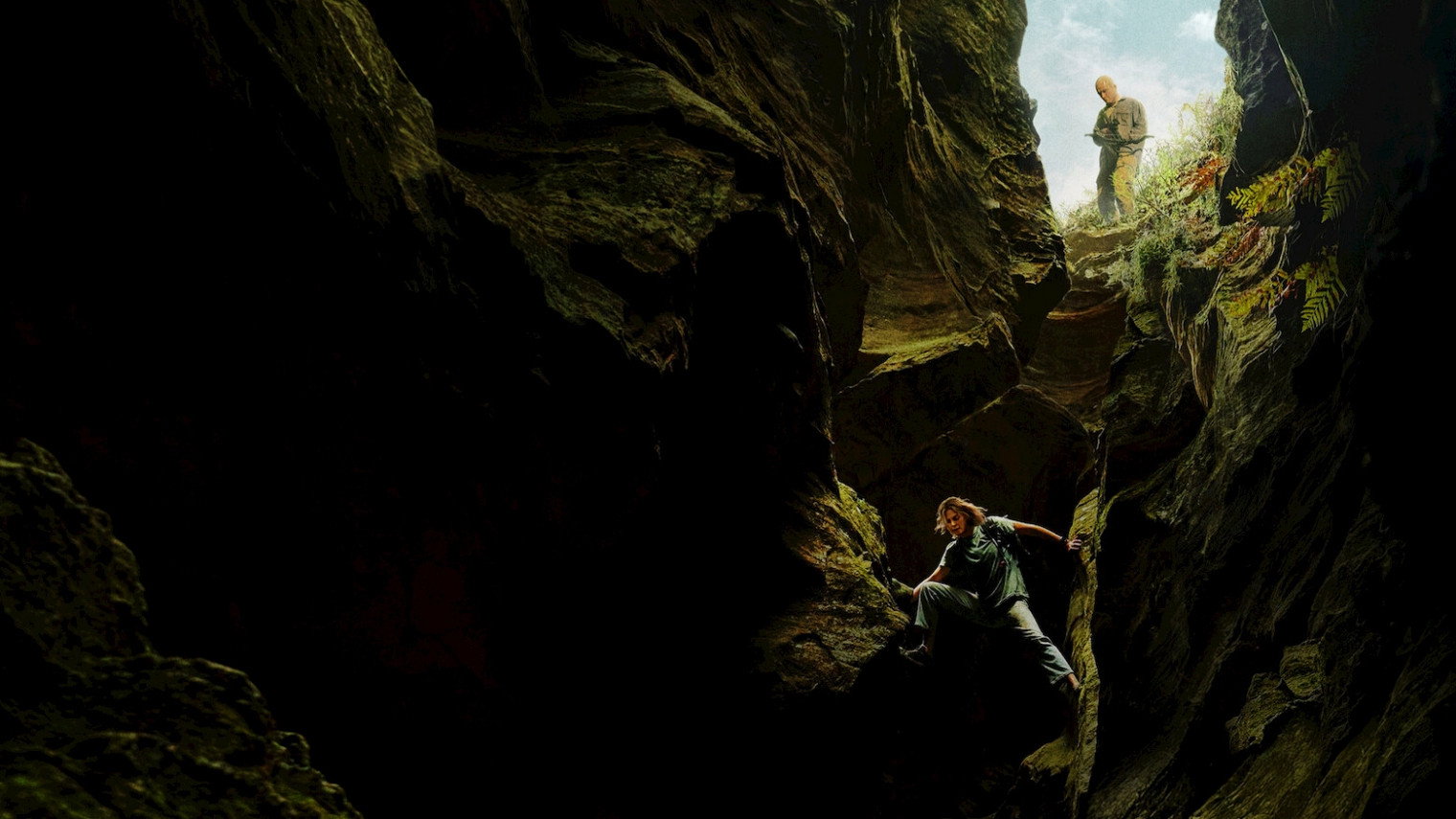
“Hunt. Survive.”
A Primal Scream in the Wilderness: Dissecting Baltasar Kormákur's 'Apex'
The Director's Wilderness and a Genre's Evolution
Baltasar Kormákur, a director whose name has become synonymous with human endurance against the unforgiving might of nature, returns with Apex, a thriller that appears to distill his signature preoccupations into a potent, primal scream. Kormákur has consistently demonstrated a fascination with individuals pushed to their absolute breaking point, often in environments that are as much characters as the protagonists themselves. From the frigid perils of Everest to the oceanic isolation of Adrift, his filmography is a testament to the fragile resilience of the human spirit when confronted by overwhelming external forces. Apex, with its premise of a grieving woman navigating the treacherous Australian wild, aligns perfectly within this thematic and stylistic lineage, promising another visceral exploration of survival.
In the contemporary landscape of action and thriller cinema, where intricate plots, technological wizardry, and sprawling franchises often dominate, Apex seems to deliberately strip away layers of complexity to return to a more elemental form of suspense. The genre today frequently grapples with moral ambiguities, psychological games, or high-concept sci-fi elements. Apex, however, positions itself as a raw, almost archetypal cat-and-mouse chase, albeit one infused with the profound emotional weight of grief. This choice could be a refreshing counterpoint, emphasizing the visceral, immediate terror of being hunted rather than the intellectual puzzle of a grand conspiracy. It suggests a return to the foundational fears that define the thriller genre, focusing on the primal instincts of fight or flight, survival, and the profound vulnerability of the individual when pitted against both a cunning human adversary and the indifferent vastness of the natural world. Kormákur's knack for grounding spectacular events in authentic human emotion could elevate this seemingly straightforward premise, allowing Apex to resonate beyond its immediate thrills.
The Unforgiving Canvas: Direction and Visual Craft
Baltasar Kormákur's directorial vision in Apex is, by its very nature, inextricably linked to the Australian wild—a landscape that promises to be both breathtakingly beautiful and utterly unforgiving. Kormákur’s established prowess in depicting extreme environments suggests that the Australian bush will be rendered not merely as a backdrop, but as an active participant in Sasha’s ordeal. The director is likely to employ a visual language that emphasizes both the expansive isolation and the claustrophobic immediacy of the wilderness. Wide, sweeping shots will undoubtedly capture the sheer scale and indifference of the landscape, dwarfing Sasha and underscoring her vulnerability. These grand vistas will likely be juxtaposed with tight, intimate close-ups, capturing every bead of sweat, every flicker of fear, and every determined glint in Charlize Theron’s eyes as Sasha navigates her harrowing journey.
The staging of the action and moments of suspense will be crucial. Kormákur's previous works demonstrate a keen understanding of spatial geography and how to exploit it for maximum tension. One can anticipate sequences where Sasha uses the environment to her advantage or, conversely, finds herself trapped by its unforgiving contours. The camera work, therefore, is expected to be dynamic yet deliberate, oscillating between handheld immediacy during moments of intense physical exertion or pursuit, and more stable, observational shots that allow the audience to absorb the vastness and the lurking danger. The editing rhythm will play a pivotal role in shaping the cinematic experience. During the relentless pursuit, the cuts are likely to be sharp, rapid, and disorienting, mirroring Sasha’s escalating panic and the killer’s relentless pressure. Conversely, moments of respite or strategic planning might be punctuated by longer takes, allowing the tension to build through sustained observation and the subtle sounds of the wild.
Sound design, in a film so deeply rooted in a natural environment, will be paramount. The absence of sound in the vast wilderness can be as terrifying as its presence. Kormákur is likely to leverage the ambient sounds of the Australian wild—the rustle of leaves, the distant calls of unseen creatures, the crunch of footsteps on dry earth—to create an immersive and unnerving soundscape. The sudden silence, or the abrupt intrusion of a human sound, could be used to punctuate moments of dread. The score, too, will undoubtedly play a critical role, likely a minimalist yet potent accompaniment that enhances the psychological tension rather than overpowering it. The combined effect of these carefully crafted elements of direction, cinematography, editing, and sound promises to plunge the audience directly into Sasha’s terrifying experience, making the cinematic journey of Apex a visceral and deeply unsettling one.
The Human Element: Performances Under Pressure
At the heart of Apex lies a collection of performances that promise to anchor its primal narrative in compelling human drama. Leading the charge is Charlize Theron as Sasha, a role that feels tailor-made for her formidable talents. Theron has consistently proven her capacity to embody characters who are both physically resilient and emotionally complex, often navigating extreme circumstances with a fierce, unwavering spirit. Her portrayal of a grieving woman pushing her limits on a solo adventure suggests a character wrestling with internal demons even before the external threat emerges. Theron’s ability to convey profound vulnerability alongside steely resolve will be crucial in making Sasha’s journey relatable and her fight for survival genuinely impactful. One can anticipate a performance marked by raw physicality, but also by the subtle emotional nuances of a woman grappling with loss while simultaneously fighting for her life. Her presence alone elevates the stakes, promising a protagonist who is not merely a victim but a force to be reckoned with.
Opposite Theron, Taron Egerton takes on the role of Ben, the cunning killer who perceives Sasha as his prey. Egerton, known for his charismatic and often intense portrayals, has the potential to craft a villain who is unsettlingly charming and deeply menacing. His ability to project both an outward veneer and an underlying darkness could make Ben a truly memorable antagonist, one whose intelligence and twisted motivations are as terrifying as his physical threat. The dynamic between Theron's raw survival instinct and Egerton's calculated malevolence will be the engine of the film's suspense, demanding a delicate balance of cat-and-mouse psychology and brutal physicality.
Adding another layer to the narrative is Eric Bana as Tommy. Bana brings a gravitas and intensity to his roles, often portraying characters with complex moral compasses or a simmering sense of danger. While his specific role in the twisted game is not explicitly detailed, his involvement suggests a character who could either be another formidable threat, an unexpected ally, or a morally ambiguous figure who further complicates Sasha’s desperate struggle. His presence alone hints at a narrative that might delve beyond a simple predator-prey dynamic, introducing additional layers of human interaction and potential betrayal or unexpected aid in the isolated wilderness. Supporting performances from Caitlin Stasey as Leah and Bessie Holland as Cashier, though perhaps more peripheral, will contribute to the texture and reality of the world Sasha inhabits before her ordeal, grounding her journey in a sense of everyday life that is brutally shattered. Collectively, the cast, particularly the central trio, promises to deliver performances that are both physically demanding and emotionally resonant, elevating Apex beyond a mere action thriller into a compelling character study under duress.
The Echoes of Grief and the Primal Hunt: Themes and Subtext
Apex, beneath its thrilling surface of a cat-and-mouse chase, delves into profound themes that resonate deeply with the human condition, particularly in today's world. The central premise of a "grieving woman pushing her limits on a solo adventure" immediately establishes grief as a foundational element. Sasha's journey into the Australian wild is not merely an escape or a quest for adventure; it is likely a metaphorical, and then literal, confrontation with her internal landscape of loss. The wilderness, in this context, becomes a crucible, forcing her to confront not only an external killer but also the raw, unaddressed pain of her grief. Her "pushing her limits" can be interpreted as an act of self-flagellation, a desperate search for meaning, or a primal need to feel alive again after experiencing profound sorrow. This intertwining of psychological trauma with physical peril elevates the narrative beyond simple survival, making it a story of resilience and the arduous process of healing, even amidst extreme threat.
The film also explores the timeless, brutal dynamic of predator and prey. This theme is not merely a literal depiction of a killer hunting a woman; it extends to the subtext of human vulnerability in a world that can often feel hostile and indifferent. Sasha, as the "prey," embodies the universal fear of being targeted, of losing control, and of being reduced to a mere object in someone else's twisted game. This resonates culturally today, where anxieties about safety, control, and the inherent dangers lurking beneath the veneer of civilization are ever-present. The "twisted game" aspect suggests a deliberate dehumanization, forcing Sasha to tap into her most primal instincts, blurring the lines between civilized conduct and the raw, animalistic drive to survive. It challenges the audience to consider what truly defines humanity when stripped of societal constructs and confronted with pure, unadulterated evil.
Furthermore, Apex touches upon the broader theme of human versus nature. The Australian wild is not just a setting; it is an active force, indifferent to human suffering, yet also offering pathways for survival. This contrast between human cunning (both the killer's and Sasha's) and the sheer, overwhelming power of the natural environment highlights humanity's fragile place within the ecosystem. The film implicitly asks: what happens when our carefully constructed world falls away, and we are left with only our wits, our will, and the raw, untamed world around us? In an era grappling with environmental concerns and a renewed appreciation for wild spaces, this interplay between human drama and natural grandeur adds another layer of cultural relevance, reminding us of both the beauty and the terrifying impartiality of the natural world. Apex, therefore, is poised to be more than just a thrilling ride; it is a meditation on grief, survival, and the primal struggle for self-preservation in the face of both human malevolence and natural indifference.
The Verdict: A Visceral Journey into the Wild
Apex emerges as a potent and uncompromising survival thriller, a film that leverages the formidable talents of its director and cast to deliver a visceral cinematic experience. Its greatest strength lies in Baltasar Kormákur’s masterful command of extreme environments, promising a depiction of the Australian wild that is both breathtakingly beautiful and terrifyingly hostile. This immersive setting, coupled with a relentless sense of tension, ensures that the film is not merely watched but felt, drawing the audience into Sasha’s desperate struggle for survival. Charlize Theron’s performance as Sasha is undoubtedly a cornerstone, offering a portrayal that blends raw physicality with profound emotional depth, making her journey of grief and resilience utterly compelling. The interplay between Theron's fierce protagonist and Taron Egerton's cunning antagonist, along with the gravitas brought by Eric Bana, creates a dynamic that is both psychologically intriguing and physically demanding, ensuring the human element remains at the forefront of the action.
However, the film’s very adherence to the conventions of the cat-and-mouse survival thriller genre could also be perceived as a potential weakness for some viewers. While its primal focus is a refreshing departure from overly complex narratives, those seeking intricate plot twists or profound philosophical revelations might find its straightforward premise less satisfying. The narrative, by design, prioritizes raw experience and visceral tension over labyrinthine storytelling, which might not appeal to every palate. The runtime of 96 minutes suggests a lean, efficient narrative, which could be a strength in maintaining relentless pacing but might leave some desiring more expansive character development beyond Sasha's immediate ordeal.
Ultimately, Apex is a film for those who appreciate intense, character-driven thrillers that do not shy away from confronting the darker aspects of human nature and the unforgiving power of the natural world. It is highly recommended for fans of Baltasar Kormákur's previous works, particularly those who enjoy his signature blend of human endurance and environmental spectacle. Viewers who admire Charlize Theron's capacity for fierce, emotionally resonant performances will find much to appreciate here. Furthermore, anyone seeking a primal, unvarnished action-thriller that grounds its suspense in genuine human stakes and the profound journey of overcoming grief will find Apex a compelling and unforgettable cinematic experience. It is a film that promises to hunt you, and in doing so, force you to confront your own instincts for survival.
Keep Reading
In Theaters → In Theaters · 2026
Aakhri Sawal
Vicky, a brilliant but volatile scholar who ignites a national firestorm when he publicly accuses his legendary mentor, Professor Gopal Nad…
Read analysis → In Theaters · 2026
Kartavya
With his family's safety at stake and menacing threats closing in, a police officer must decide how far he'll go to uphold his duty.
Read analysis → In Theaters · 2026
GOAT
A small goat with big dreams gets a once-in-a-lifetime shot to join the pros and play roarball, a high-intensity, co-ed, full-contact sport…
Read analysis → In Theaters · 2026
Ready or Not: Here I Come
Moments after surviving an all-out attack from the Le Domas family, Grace discovers she’s reached the next level of the nightmarish game —…
Read analysis →