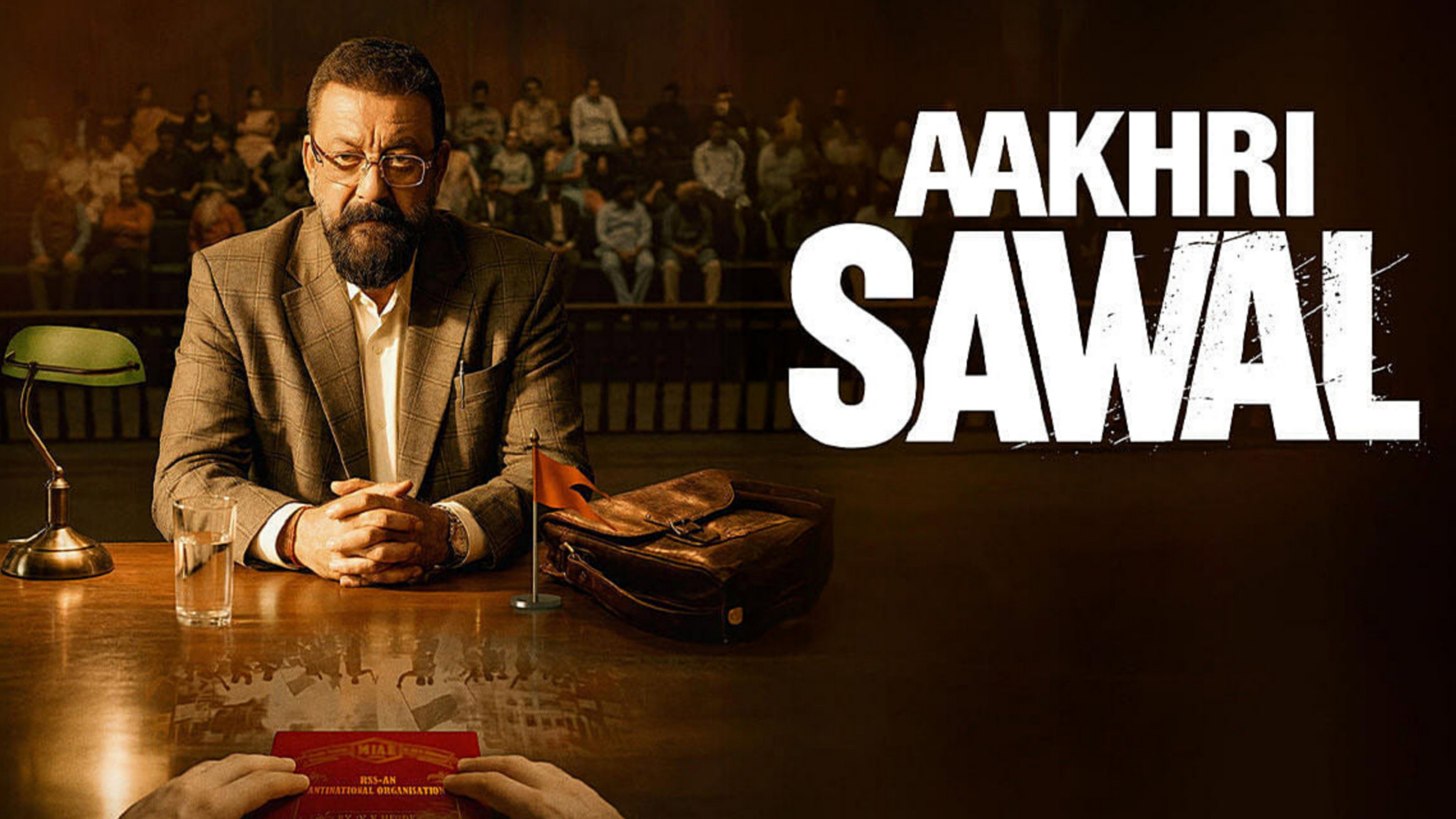
AAKHRI SAWAL
Archive Entry No. 2026-PR
The Colosseum of Nuance: Aakhri Sawal and the Death of the Intellectual Sanctuary
In an era where public discourse has been reduced to gladiatorial spectacles of 280-character soundbites and algorithmic outrage, Aakhri Sawal arrives in theaters as a devastatingly precise autopsy of the modern intellectual landscape. Released on May 15, 2026, this cinematic tour de force transcends the boundaries of a standard academic drama, morphing instead into a psychological thriller that interrogates how easily truth is weaponized when fed into the maw of the attention economy.
The Architecture of Discord: Visual and Auditory Claustrophobia
Cinematically, the film is a masterclass in spatial tension. The director brilliantly establishes a stark visual dichotomy between the two primary arenas of the film: the ivy-covered, shadow-drenched halls of the university and the garish, over-saturated, multi-camera setup of the television studio. In the first half, the camera lingers in wide, static shots of wood-paneled libraries, capturing the weight of tradition and the stifling silence of institutional hierarchy. Here, the lighting is naturalistic, almost melancholic, reflecting the quiet dignity—and perhaps the stagnant complacency—of Professor Gopal Nadkarni’s academic empire.
However, when Vicky’s accusation of institutional bias is hijacked by the media, the visual language undergoes a violent mutation. The quiet, dust-mote-filled frames are replaced by hyper-kinetic, handheld camera movements and aggressive, high-contrast lighting that mimics the cold glare of LED screens. The sound design shifts from the gentle rustle of turning pages and distant footsteps to a suffocating cacophony of overlapping dialogue, ringing phones, and the low, ominous hum of studio feedback. This auditory assault successfully induces a state of sensory overload, making the audience feel the claustrophobia of a man being dissected in real-time under the national gaze.
A Duel of Generations: Performance as Ideological Warfare
The film’s emotional gravity rests entirely on the volatile chemistry between its two leads. As Vicky, the brilliant but deeply fractured scholar, the lead actor delivers a performance of raw, nerve-shredding intensity. He portrays Vicky not as a flawless martyr, but as a tragic figure whose genuine grievances are inextricably bound to his own ego and volatile temper. Every twitch, every desperate crack in his voice betrays a man who realizes, too late, that the fire he lit to warm himself has grown into a wildfire he cannot control.
Opposite him, the veteran actor portraying Professor Gopal Nadkarni is a monument of quiet, fading authority. With a subtle stoicism, he embodies the old guard—defensive, paternalistic, yet possessing a genuine, deeply-rooted love for the hermeneutics of his discipline. The tragedy of their relationship lies in the unspoken tragedy of academia itself: the failure of mentorship. The scenes where they share the screen, particularly during the climactic televised "intellectual trial," are electrifying. It is a masterclass in subtext, where every micro-expression conveys a decade of unspoken resentment, ideological betrayal, and a profound, mutual sense of loss.
The Post-Nuance Era: A Mirror to Our Cultural Malaise
What elevates Aakhri Sawal from a localized academic dispute to a work of profound cultural relevance is its scathing critique of the media-political complex. The film brilliantly illustrates how a nuanced debate about systemic bias is flattened, commodified, and weaponized by the sensationalist news anchor and the ambitious political activist. These characters are not mere caricatures; they are chillingly recognizable avatars of our current cultural moment—vultures who feed on polarization.
The "intellectual trial" at the heart of the film serves as a metaphor for the death of nuance. In this televised arena, complex sociological arguments are reduced to binary shouting matches designed to generate clicks and ratings. The film forces the audience to confront their own complicity as consumers of this digital colosseum. We are left asking: in a world where every disagreement is elevated to a public execution, is truth even the objective, or is it merely the casualty that draws the biggest crowd?
Aakhri Sawal is a vital, uncomfortable, and deeply intellectual cinematic experience. It does not offer easy answers or moral absolution. Instead, it leaves the audience in the quiet darkness of the theater, haunted by the realization that when the shouting stops, only the ruins of dialogue remain.