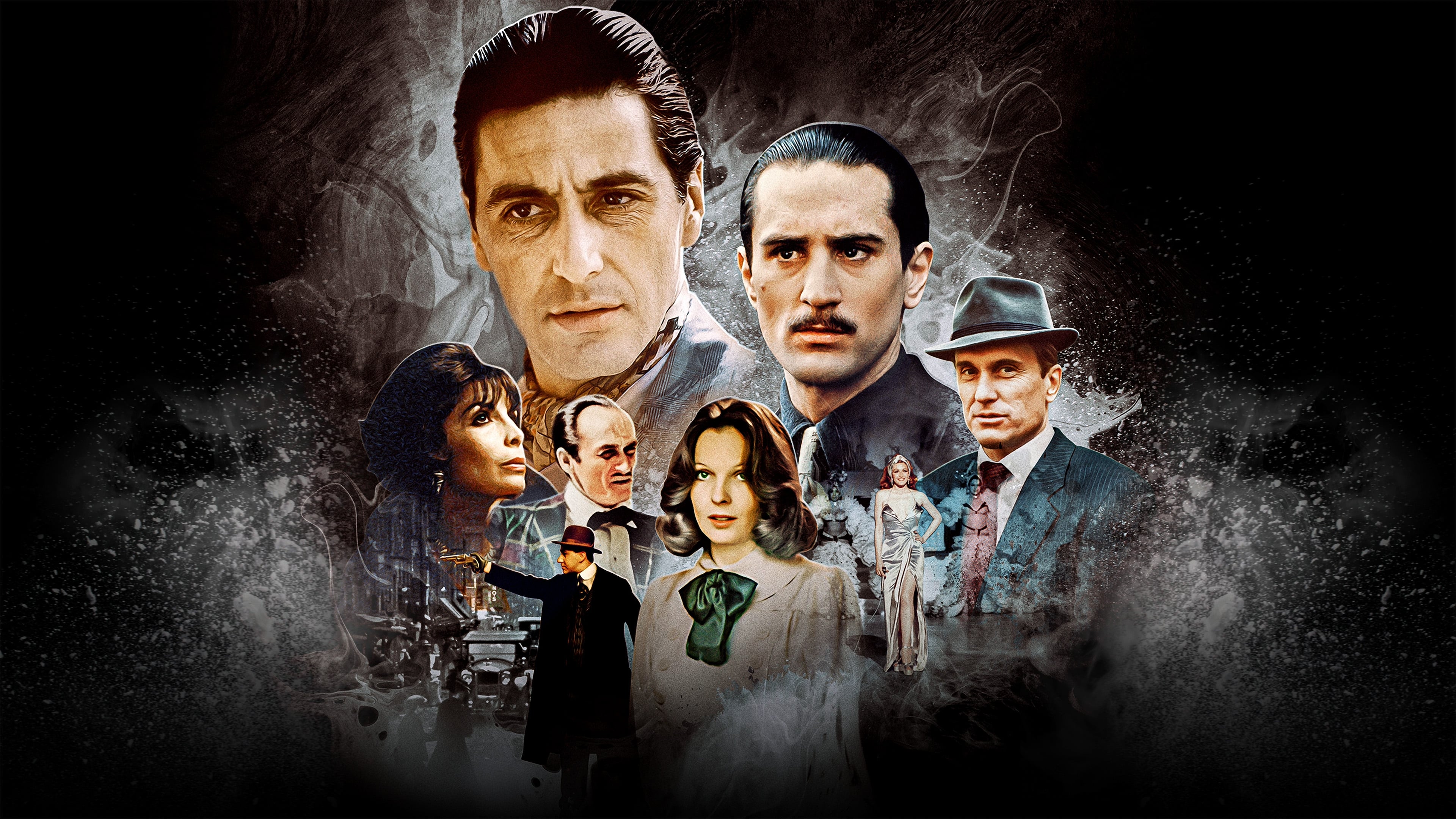
THE GODFATHER PART II
Archive Entry No. 1974-PR
The Double-Helix of American Myth: A Retrospective on The Godfather Part II
Released in the twilight of 1974, Francis Ford Coppola’s The Godfather Part II stands not merely as a monumental sequel, but as the definitive cinematic autopsy of the American Dream. While its predecessor established the operatic grandeur of the Corleone dynasty, this sophomore masterpiece operates as a profound, dialectical critique of power, capitalism, and moral erosion. By employing a daring dual-narrative structure, Coppola and co-writer Mario Puzo construct a cinematic mirror, reflecting the immigrant promise of the early 20th century against the cold, corporate decay of post-war America.
The Parallel Descents: Legacy and the Corruption of Family
At the thematic heart of the film lies a devastating juxtaposition. We witness the rise of young Vito Corleone (Robert De Niro) in the sun-drenched, dusty streets of Sicily and the teeming tenements of 1910s New York, contrasted sharply with the spiritual disintegration of his son, Michael (Al Pacino), in the late 1950s. Vito’s criminality is born of necessity and community preservation; he builds an empire to protect his family. Conversely, Michael’s quest to legitimize and expand that same empire into Las Vegas and pre-revolutionary Cuba ultimately destroys the very family he claims to defend.
The Godfather Part II brilliantly deconstructs the myth of the benevolent patriarch, illustrating how the ruthless pursuit of capital and security inevitably demands the sacrifice of one's humanity. Michael’s journey is a tragic trajectory toward absolute isolation. By the film's climax, his victories are hollow, marked by the alienation of his sister, the banishment of his wife, and the fratricide of Fredo—a moral point of no return that redefines the family business as a spiritual wasteland.
The Prince of Darkness: Gordon Willis’s Visual Legacy
To watch the film today is to marvel at the timeless genius of cinematographer Gordon Willis, affectionately dubbed the "Prince of Darkness." Willis’s work on this film remains a masterclass in visual storytelling, defying the flat, bright lighting of its era. Today, in an age dominated by digital sensors and pristine high-definition, Willis’s bold use of underexposure and rich, textured shadows holds up as a triumph of celluloid artistry.
He establishes two distinct visual palettes that define the film's temporal shifts. The warm, amber-hued, sepia-toned past of Vito’s New York evokes a nostalgic, mythic warmth, suggesting a community bound by blood and tradition. In contrast, the cold, desaturated, steel-blue tones of Michael’s Lake Tahoe estate feel sterile and hostile. The shadows in Michael’s world are not merely aesthetic; they are predatory. Willis frequently keeps Pacino’s eyes obscured in darkness, visually representing a soul retreating from the light. This chiaroscuro technique creates an oppressive atmosphere of paranoia and secrecy that feels as visceral today as it did fifty years ago.
An Enduring Monument of American Cinema
The legacy of The Godfather Part II is woven into the very fabric of modern narrative art. It shattered the conventional wisdom that sequels were destined to be cheap cash-ins, becoming the first sequel to win the Academy Award for Best Picture. Its influence extends far beyond the gangster genre, paving the way for the morally complex antiheroes of contemporary prestige television.
More than a film, it is a historical document of a nation’s disillusionment in the wake of Watergate and Vietnam—a bleak reflection of institutional corruption where the line between organized crime and legitimate government is entirely erased. Half a century later, Coppola's magnum opus remains an unmatched achievement of scale, intimacy, and cinematic gravitas, proving that the most profound tragedies are those we build for ourselves.