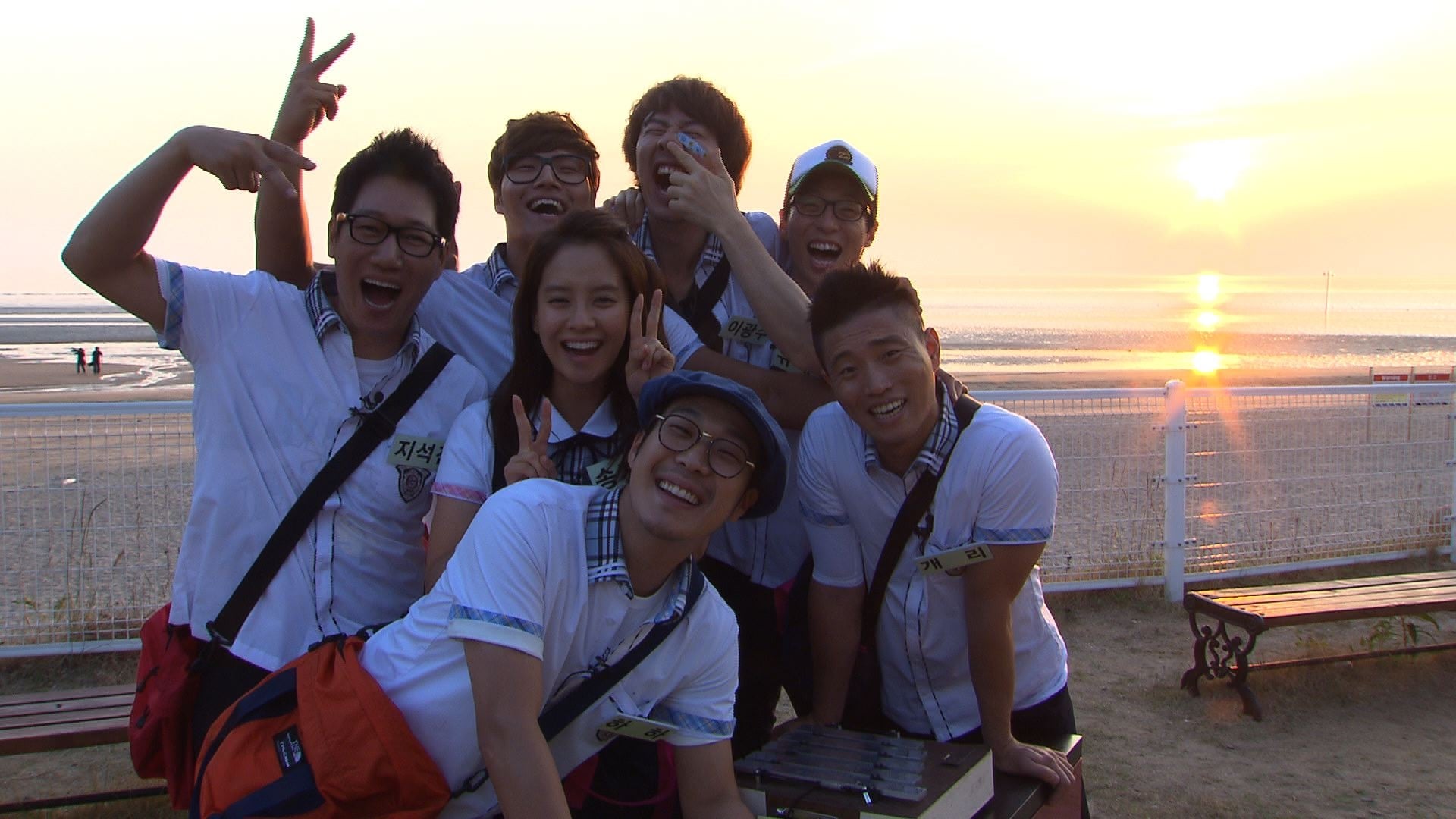
RUNNING MAN
Archive Entry No. 2010-PR
The Architecture of Play: Deciphering the Longevity of Running Man
In the landscape of global television, few formats are as notoriously ephemeral as the variety show. Designed for immediate consumption, they often flicker brightly before fading into cultural irrelevance. Yet, South Korea’s Running Man, which premiered on July 11, 2010, has defied the gravity of television obsolescence. For over a decade, it has anchored Sunday evening programming, transforming from a simple game show into a complex, self-sustaining cultural ecosystem. To understand its longevity is to look past the surface-level slapstick and analyze the sophisticated mechanics of its world-building, the evolutionary depth of its character arcs, and the calculated rhythm of its narrative pacing.
Spatial Re-Enchantment: The Art of Variety World-Building
While scripted dramas construct worlds through production design and CGI, Running Man achieves world-building through the semiotic transformation of everyday reality. The show treats the modern metropolis—shopping malls, museums, and public parks—not merely as backdrops, but as liminal playgrounds governed by a highly specific mythology.
The foundational law of this universe is the "Name-Tag Ripping" game, a physical mechanic that carries the weight of a Shakespearean duel. By affixing velcro name-tags to the cast's backs, the show establishes a literal and metaphorical vulnerability. Over hundreds of episodes, the production team has layered this basic framework with complex lore, introducing supernatural "superpower" episodes, time-travel paradoxes, and spy thrillers. This is world-building of the highest order: it establishes a soft-magic system within the confines of reality television, where a simple water gun can become an instrument of betrayal, and a hidden clue can rewrite the power dynamics of the entire ensemble.
The Picaresque Ensemble: Character Arcs in Perpetuity
Unlike fictional narratives that march toward a definitive resolution, the character arcs in Running Man operate on a picaresque model. The cast members do not play themselves; rather, they perform highly curated, exaggerated archetypes that have evolved organically over a decade of shared history.
Consider the tragicomic trajectory of Lee Kwang-soo, who transitioned from a quiet, lanky rookie into the "Icon of Betrayal"—a modern-day Harlequin whose desperate, rule-bending antics became a source of narrative tension. Conversely, Kim Jong-kook’s evolution from an intimidating, near-mythical physical antagonist ("Spartakooks") to a dryly witty, paternal overseer demonstrates a profound adaptation to the natural aging process of the cast. These are not static caricatures. The relationships—such as the sibling-like rivalry between Yoo Jae-suk and Jee Seok-jin—possess a lived-in warmth. The audience is not merely watching comedians perform; they are witnessing a decade-long chronicle of human connection, aging, and mutual affection disguised as competitive play.
The Rhythm of Chaos: Micro and Macro Pacing
The narrative pacing of Running Man is a masterclass in tension management, operating on both micro and macro levels. On the micro level, an individual episode is structured like a three-act play. It begins with low-stakes, banter-heavy introductions that establish the thematic tone. The second act introduces escalating complications through mini-games, and the final act culminates in a high-intensity chase or psychological deduction game. The editing is kinetic, utilizing recurring musical motifs and multi-angle replays to stretch seconds of physical confrontation into operatic climaxes.
On the macro level, the show’s pacing has gracefully adapted to the physical realities of its cast. In its early years, the pacing was relentless, driven by raw athleticism and physical exhaustion. As the cast matured, the show intelligently decelerated, shifting its focus from raw physical endurance to psychological warfare, betrayal-heavy board games, and talk-show-style banter. This transition preserved the health of the performers while deepening the intellectual engagement of the audience.
Conclusion
Ultimately, Running Man is more than a weekly escape; it is a monument to the narrative possibilities of unscripted television. By treating play as a serious narrative art form, it has built a world where laughter is the currency, character is forged through betrayal, and the passage of time is celebrated rather than feared. It invites the viewer to open their eyes, mouth, and heart to a rare television miracle: a show that grew old with its audience without ever losing its youthful soul.