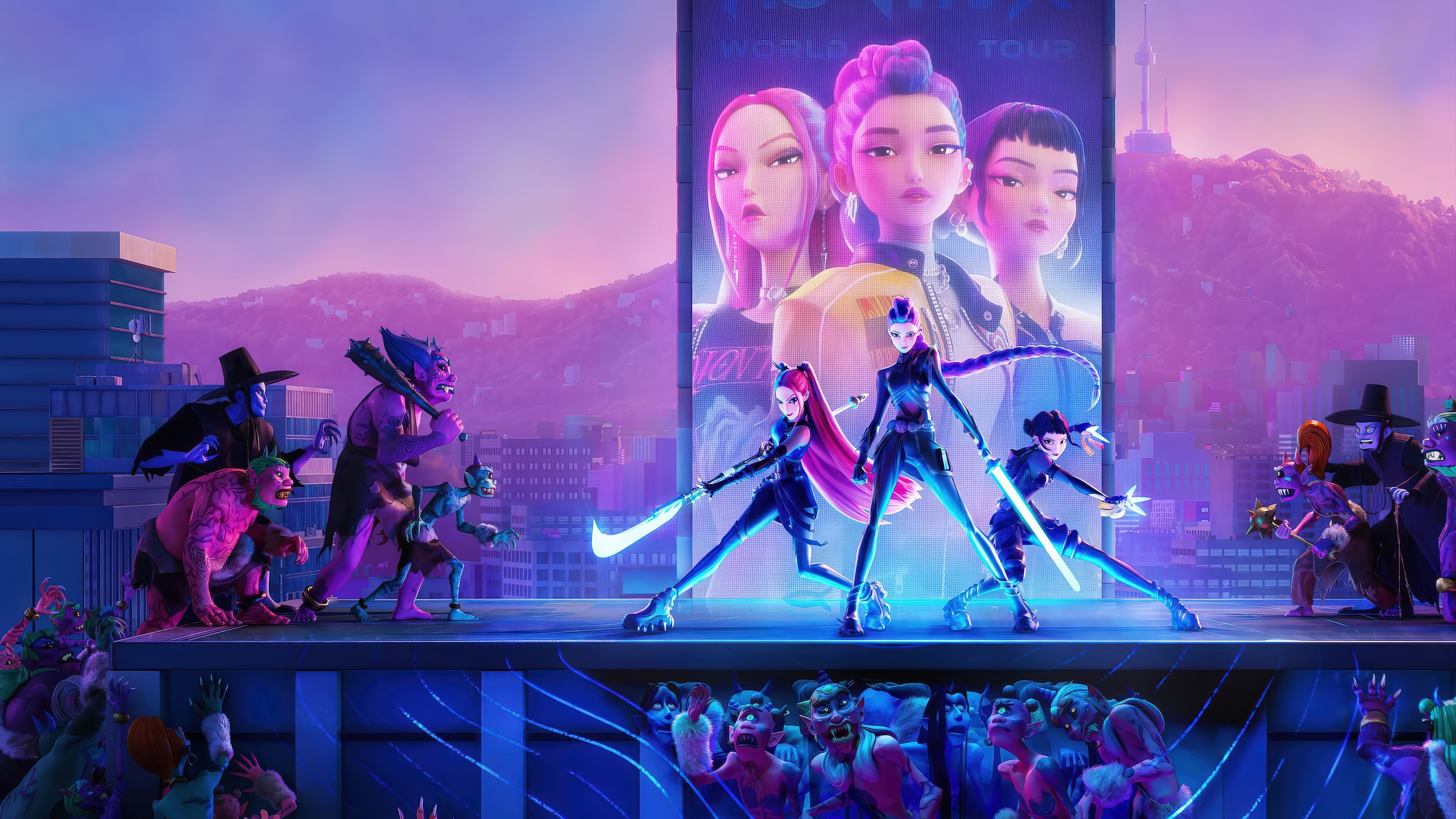
KPOP DEMON HUNTERS
Archive Entry No. 2025-PR
On the Horizon: The High-Camp, High-Concept Promise of "KPop Demon Hunters"
As we look toward the summer blockbuster landscape of 2025, few titles on the cinematic radar provoke as much intellectual curiosity and sheer aesthetic anticipation as KPop Demon Hunters (scheduled for release on June 20, 2025). On its surface, the premise—following K-pop superstars Rumi, Mira, and Zoey as they balance stadium tours with supernatural vigilantism—reads like a fever dream of contemporary pop culture synthesis. Yet, beneath this glossy, hyper-stylized exterior lies the potential for a groundbreaking genre hybrid that could redefine the boundaries of modern action-fantasy and globalized cinema.
Genre Synthesis: Choreography as Combat
The most immediate point of fascination for film analysts is how the film will execute its hybrid genre identity. KPop Demon Hunters sits at the intersection of the East Asian idol industry and Western urban fantasy, a space previously occupied only by niche anime or transmedia projects. The film promises a fascinating translation of medium-specific skills: the rigorous, synchronized choreography of K-pop dance routines reimagined as martial arts and spellcasting.
If executed with the kinetic precision of modern action cinema (akin to the John Wick franchise) and the vibrant, neon-drenched aesthetic of contemporary music videos, the film could establish a new visual language. The stage becomes an altar; the performance, a ritual. By elevating the pop performance to a literal battle for humanity's soul, the film has the opportunity to subvert the traditional "secret identity" trope, suggesting that the discipline required for global stardom is the very crucible that prepares these young women for cosmic warfare.
Thematic Resonance: Parasocial Exorcisms and the Price of Idolization
Beyond the visceral thrills of neon-hued demon slaying, KPop Demon Hunters possesses a rich vein of thematic material ripe for exploration. At the heart of the K-pop phenomenon is the intense, highly commodified relationship between idols and their fandoms—a dynamic characterized by extreme loyalty, digital intimacy, and, occasionally, toxic possessiveness. By positioning Rumi, Mira, and Zoey as literal protectors of their fanbase against supernatural threats, the narrative literalizes the parasocial contract.
A sophisticated screenplay will use the "demons" as metaphors for the very real anxieties plaguing youth culture today: the pressures of perfectionism, the vitriol of online spaces, and the exhausting demands of the attention economy. Are these demons external entities, or are they manifestations of the collective psychic stress of a hyper-connected generation? If the film dares to interrogate the industry that births these superstars while celebrating the genuine community of fandom, it could transcend its campy premise to become a poignant critique of modern celebrity culture.
Anticipation and Industry Impact: A Transmedia Paradigm
From an industry perspective, the anticipation surrounding this release is monumental. The global footprint of K-pop is undeniable, possessing a demographic that is digitally native, highly organized, and intensely loyal. KPop Demon Hunters is uniquely positioned to exploit this synergy. The film is not merely a cinematic event; it is a multi-platform launchpad. We can expect a highly anticipated soundtrack, viral marketing campaigns mimicking real idol rollouts, and a massive push in fashion and merchandise.
The risk, of course, lies in the execution. Will the film lean too heavily into superficial fan service, or will it commit to the dark, esoteric world-building required of a truly compelling fantasy? For the film to succeed intellectually, director and writers must treat both halves of the title with equal gravity. The demonology must feel threatening, and the music must feel authentic.
The Verdict
KPop Demon Hunters is poised to be either a cynical exercise in demographic targeting or a brilliant, genre-defining masterpiece of pop-art cinema. By fusing the high-stakes discipline of the music industry with the mythic battles of ancient lore, it offers a fresh canvas for exploring the burdens of youth, fame, and devotion. When June 20, 2025, arrives, the industry will be watching closely to see if this ambitious fusion can truly harmonize.