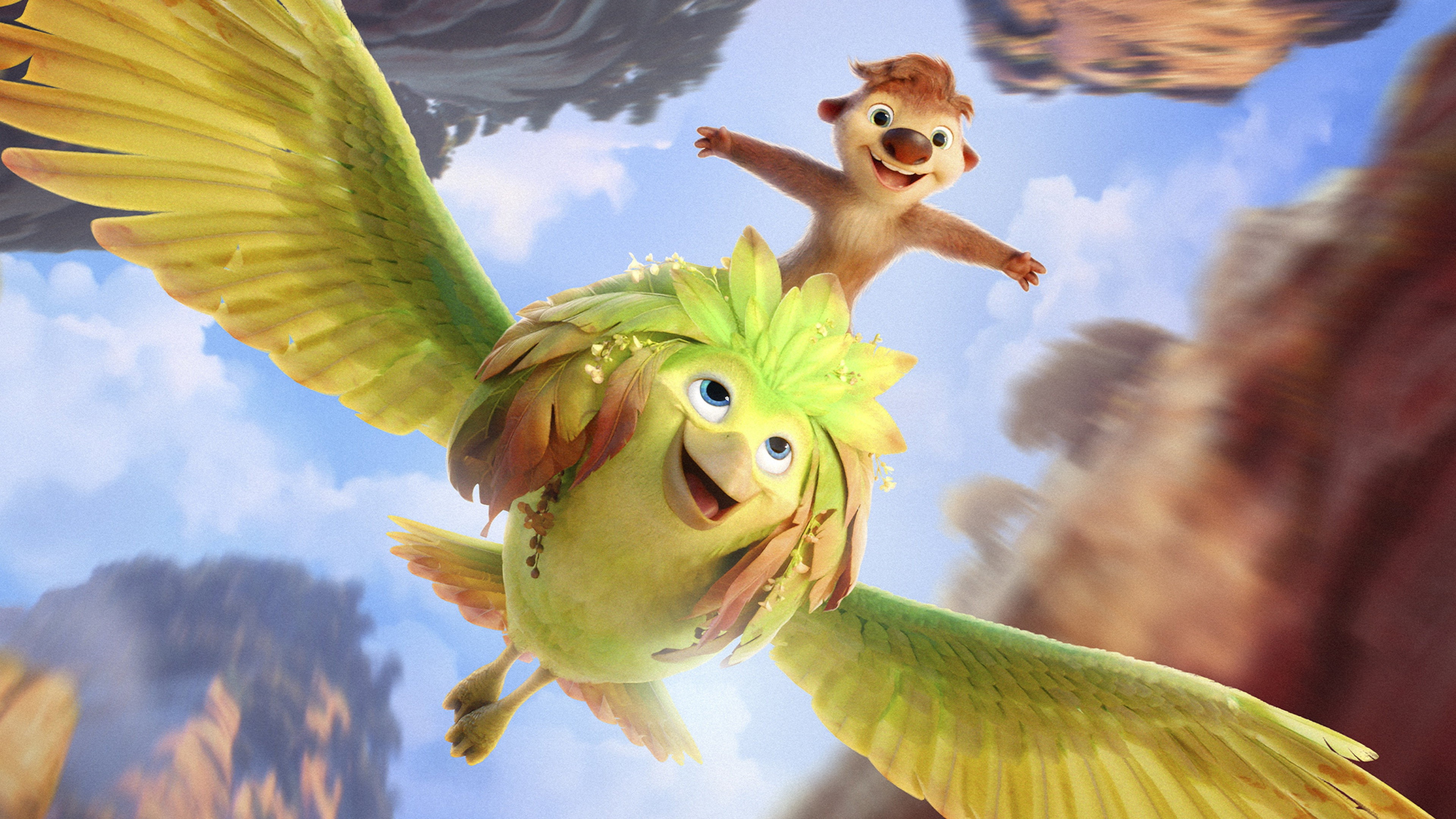
Swapped
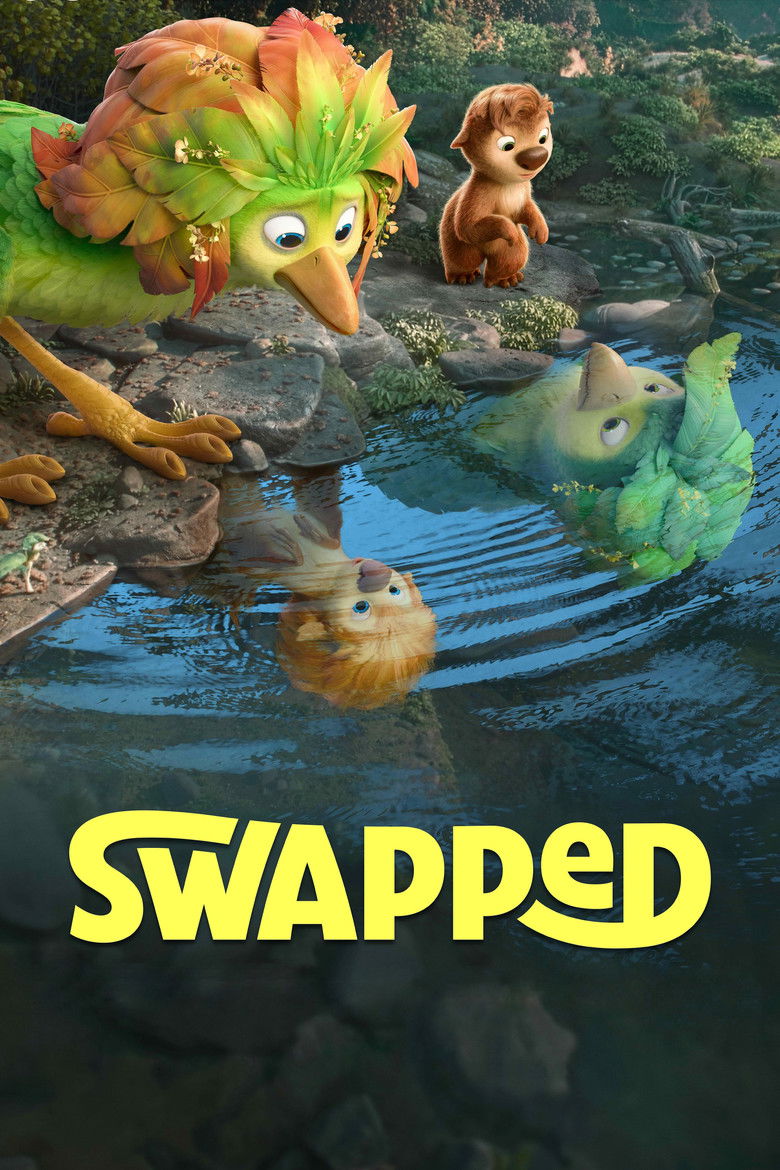
"A small woodland creature and a majestic bird, two natural sworn enemies of the Valley, magically trade places and set off on an adventure of a lifetime to switch back. Their journey soon uncovers a greater threat—one that could endanger not only their species, but the entire valley they call home."
A Transcendental Eco-Parable: Decoding the Visual and Thematic Brilliance of Swapped
The body-swap subgenre has long been a staple of commercial cinema, typically deployed as a vehicle for lighthearted domestic comedies or adolescent identity crises. However, in the visually arresting and emotionally profound Swapped (released May 1, 2026), this familiar narrative device is elevated to the level of high art. Directed with a keen eye for ecological poetry, the film chronicles the magical transposition of Bramble, a trembling but resilient pine vole, and Zephyr, a majestic peregrine falcon. As natural sworn enemies of the Whispering Valley, their literal exchange of perspectives becomes a breathtaking exploration of empathy, survival, and environmental codependency. Far from a simple children's fable, Swapped is a sophisticated, sensory-rich cinematic triumph that masterfully fuses cutting-edge cinematography, deeply felt vocal performances, and urgent ecological themes.
Thematic Architecture: Empathy, Alterity, and the Ecological Web
At the beating heart of Swapped is the philosophical concept of alterity—the experience of the absolute "other." The film utilizes its fantastical premise to dismantle the traditional predator-prey binary that governs the natural world. When Bramble’s consciousness is cast into the soaring, razor-sharp form of the falcon, and Zephyr is compressed into the fragile, dirt-caked body of the vole, the narrative transcends simple identity confusion to interrogate the nature of fear and power.
The screenplay brilliantly maps this psychological transition through several thematic layers:
- The Burden of the Predator: Trapped in the falcon’s body, Bramble experiences the exhausting demands of apex survival—the hyper-vigilance, the agonizing physical toll of high-speed hunting, and the profound isolation of the skies.
- The Terror of the Prey: Zephyr, conversely, is forced to confront the absolute vulnerability of the forest floor. In the vole’s body, every rustle of dry leaves is a potential death knell, and the once-insignificant shadows of the canopy become oppressive, predatory monoliths.
- Interconnectedness in the Anthropocene: The film’s second act shifts from personal survival to collective salvation. The "greater threat" confronting the valley—a devastating, creeping toxic runoff from a nearby abandoned industrial site—serves as a metaphor for the systemic environmental crises of our own world. The characters realize that their ancient animosity is a luxury they can no longer afford; if the valley dies, the hierarchy of predator and prey dies with it.
By forcing these natural adversaries to literally inhabit each other’s physical vulnerabilities, the film argues that true environmental stewardship cannot exist without radical empathy. It suggests that the survival of our shared ecosystem requires us to look beyond our immediate place in the food chain and acknowledge our collective responsibility to the earth.
Visual Splendor: The Cinematography of Perspective
Cinematographically, Swapped is nothing short of a masterpiece, utilizing distinct visual languages to define the polarized experiences of its protagonists. The camera work acts as an emotional barometer, shifting fluidly between micro-realism and macro-epic scales.
The Forest Floor: Macro Intimacy and Claustrophobia
When focusing on Zephyr-as-vole, the cinematography employs extreme close-up macro lenses with an incredibly shallow depth of field. This stylistic choice renders the forest floor as a towering, chaotic labyrinth. Blades of grass resemble emerald pillars, and pebbles take on the scale of menacing boulders. The camera remains low, tracking frantically at ground level, which instills a palpable sense of kinetic dread. Chromatic aberration and soft-focus edges are used to mimic the vole’s limited, movement-sensitive vision, trapping the audience in a state of sensory overload and physical vulnerability.
The Vault of Heaven: Dizzying Heights and Kinetic Freedom
In contrast, the sequences featuring Bramble-as-falcon are captured with sweeping, wide-angle anamorphic lenses. Here, the color palette shifts from the warm, damp earth tones of the forest floor to cold, crisp blues, blinding golds, and stark whites. The camera movements are grand, utilizing simulated drone-work and soaring crane shots that evoke a dizzying sense of vertigo. Yet, there is a brilliant subversion in these aerial sequences: when Bramble first attempts to fly, the camera loses its smooth, gliding stability, shaking violently to mirror his panic and lack of motor control. Only when he begins to understand Zephyr’s biological rhythm does the camera regain its sweeping, majestic fluidity.
The visual climax of the film—where the duo must navigate a burning, smoke-choked ravine to redirect the toxic runoff—blends these two visual styles. The editing cuts rapidly between the suffocating, ash-laden ground level and the chaotic, thermally unstable skies, creating a masterclass in tension and environmental scale.
Vocal Alchemy: Acting Through Physical Dissonance
The success of an animated or hybrid film of this nature relies heavily on its vocal performances, and the voice cast of Swapped delivers career-defining work. The actors face the unique challenge of playing characters who are actively fighting against the biological instincts of the bodies they inhabit.
Dev Patel lends his voice to Bramble (the pine vole in the falcon’s body). Patel masterfully injects a frantic, breathless energy into the regal frame of the raptor. His vocal delivery is filled with stuttering anxieties, sudden gasps of air, and a trembling gentleness that contrasts hilariously, and then touchingly, with the bird's razor-sharp physical presence. Watching a massive falcon gently nudge a fallen seedling while speaking with Patel's tender, panic-stricken cadence is both heartbreaking and endearing.
Conversely, Florence Pugh voices Zephyr (the falcon trapped in the vole’s body). Pugh delivers a masterclass in restrained fury and misplaced authority. She retains her characters' aristocratic, sharp-tongued dignity even when her voice is pitch-shifted to match the tiny, rapid vocal cords of a rodent. Pugh’s performance captures the profound frustration of a creature born to rule the skies, now reduced to scurrying through the mud. The gradual softening of her performance—from cold, imperious detachment to a warm, fiercely protective affection for her tiny companion—forms the emotional spine of the film.
The supporting cast, voicing the various denizens of the Whispering Valley, provides excellent texture, but it is the central chemistry between Patel and Pugh that elevates the movie. Their dual vocal tracks create a beautiful counterpoint, illustrating two souls slowly finding harmony amidst biological chaos.
Conclusion: A Modern-Day Aesop for the Anthropocene
In an era of cinema often dominated by formulaic sequels and superficial spectacles, Swapped stands out as a beacon of original, high-concept storytelling. It respects its audience’s intelligence, delivering a complex ecological message without resorting to heavy-handed moralizing. Through its stunning visual dichotomy, profound thematic depth, and extraordinary voice acting, the film reminds us that survival is not a solitary race, but a cooperative dance. Swapped is more than a technical marvel; it is a deeply moving, cinematic hymn to the natural world, destined to be remembered as a landmark achievement in modern filmmaking.