
Project Hail Mary
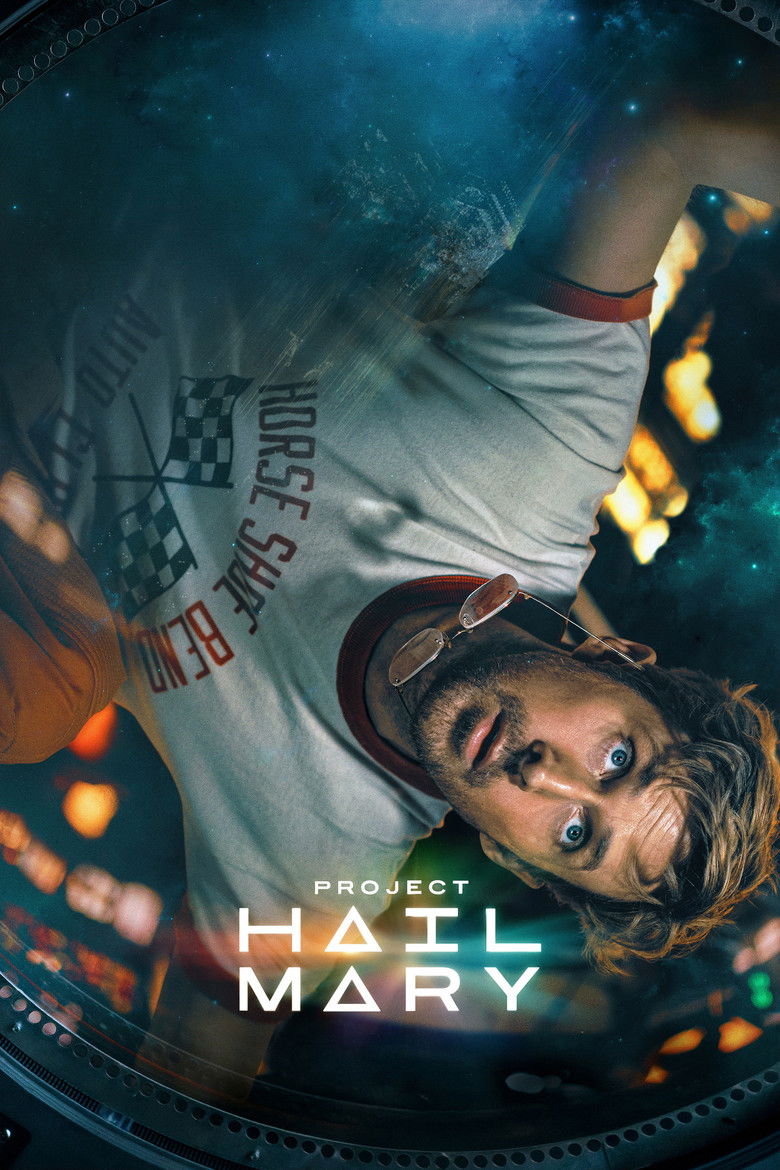
"Science teacher Ryland Grace wakes up on a spaceship light years from home with no recollection of who he is or how he got there. As his memory returns, he begins to uncover his mission: solve the riddle of the mysterious substance causing the sun to die out. He must call on his scientific knowledge and unorthodox ideas to save everything on Earth from extinction."
The Triumph of Intellect and Empathy: A Masterclass in Sci-Fi Humanism
When adapting Andy Weir’s celebrated hard science-fiction novel, Project Hail Mary, filmmakers faced a double-edged sword: the book’s immense popularity and its highly internal, scientifically rigorous narrative. In their March 2026 cinematic adaptation, directors Phil Lord and Chris Miller transcend these challenges, delivering an audiovisual marvel that is both intellectually stimulating and deeply emotional. The film succeeds not merely as a high-budget spectacle, but as a profound meditation on isolation, the ethics of survival, and the universal nature of friendship. It stands as a landmark achievement in contemporary science fiction, bridging the cerebral depth of Interstellar with the pragmatic, survivalist charm of The Martian.
Existential Altruism and Science as a Universal Language
At the beating heart of Project Hail Mary are its rich, interconnected themes. The film begins as an existential mystery. Ryland Grace (played with meticulous vulnerability by Ryan Gosling) wakes up in the sterile, claustrophobic confines of a spaceship with no memory of his identity or his mission. As his memories return in fractured, non-linear flashbacks, the narrative unveils a grander, terrifying truth: the sun is dying, consumed by a microscopic, light-eating organism called Astrophage, and Grace is Earth's final, desperate gamble against extinction.
The film masterfully explores several core thematic pillars:
- The Burden of Unwilling Heroism: Unlike typical space-faring protagonists who are driven by duty or adventure, Grace is a reluctant savior. His journey is one of moral reckoning, shifting from self-preservation to absolute selflessness.
- Utilitarianism vs. Individual Ethics: Through the character of Eva Stratt (Sandra Hüller), the administrator of the Hail Mary project, the film tackles the cold, calculating mathematics of survival. Stratt represents the grim necessity of sacrificing individual rights to save the collective human race.
- The Universality of Science: When Grace encounters Rocky, an inorganic, spider-like alien from a neighboring solar system facing the same ecological doom, the film pivots into a beautiful thesis on cooperation. Science, math, and physics become the bridge that unites two entirely different civilizations. Their alliance proves that curiosity and empathy are not uniquely human traits, but cosmic constants.
A Tactile and Contrast-Driven Visual Odyssey
The cinematography of Project Hail Mary is nothing short of extraordinary. The filmmakers utilize visual language not just to capture the vastness of space, but to mirror Ryland Grace’s internal psychological state. The visual design is divided into three distinct aesthetic palettes, each serving a narrative purpose.
First, the interior of the Hail Mary spaceship is characterized by a claustrophobic, clinical coldness. The camera operates in tight, handheld movements, emphasizing Grace’s disorientation and physical fragility in the film's first act. The lighting here is sterile, dominated by harsh whites and metallic grays, reflecting the clinical nature of his forced isolation.
Second, the Earth-bound flashbacks are shot with a warmer, golden-hour haze. These scenes feel grounded, tactile, and nostalgic, juxtaposing the cold reality of Grace’s current existence with the vibrant, messy world he left behind. The shallow depth of field in these sequences emphasizes his subjective memory retrieval, capturing the sensory details of a world on the brink of collapse.
Finally, the outer-space sequences—particularly the encounters with the alien ship, the Blip-A, and the harsh environment of Tau Ceti—are breathtaking in their scale. The cinematography embraces wide, anamorphic lenses that capture the terrifying grandeur of the cosmos. The depiction of Astrophage as a shimmering, crimson-gold river of light flowing across stars is both visually arresting and scientifically evocative. The visual effects are seamlessly integrated, treating gravity, vacuum, and cosmic light with a realism that heightens the stakes of every physical maneuver.
The Anatomy of Solitude: Acting and Character Dynamics
Carrying a film where the protagonist is isolated for a significant portion of the runtime is a monumental task, but Ryan Gosling delivers one of the most compelling performances of his career. Gosling’s performance is a masterclass in physical acting and emotional calibration. In the opening sequences, his portrayal of amnesia is raw and distressing; we see the terror in his micro-expressions before his intellect kicks in to solve the immediate dangers of the ship. Gosling perfectly balances the dry, self-deprecating humor of a middle-school science teacher with the crushing weight of existential dread.
As the film progresses, the dynamic shifts with two crucial supporting performances:
Sandra Hüller as Eva Stratt: Hüller is spectacular as the pragmatic, fiercely determined architect of Earth's salvation. She plays Stratt not as a cold villain, but as a tragic figure burdened with absolute authority. The chemistry between Hüller and Gosling in the flashback sequences is electric, characterized by a philosophical clash between academic idealism and geopolitical realism.
Rocky (Voice and Physicality): The creation of Rocky is the film's greatest triumph. Avoiding the trap of anthropomorphic alien tropes, Rocky is a five-legged, metallic-shelled being who communicates through musical chords. The voice acting and sound design work in perfect harmony with the puppetry and digital effects to create a character that feels utterly alien yet profoundly expressive. The slow development of communication between Grace and Rocky—transitioning from mutual suspicion to a deep, heartbreaking camaraderie—forms the emotional core of the film. Gosling’s ability to project warmth, frustration, and love toward a completely non-humanoid companion is a testament to his exceptional acting prowess.
Conclusion: A Beacon of Hope in Modern Cinema
Project Hail Mary is a rare cinematic achievement that honors the intelligence of its audience. Directors Phil Lord and Chris Miller have crafted a film that treats complex scientific problem-solving as a source of genuine cinematic tension. It reminds us that humanity's greatest tools are not weapons of war, but our capacity for logic, adaptiveness, and cross-cultural empathy.
Supported by stunning cinematography that captures both the micro-terrors of zero-gravity isolation and the macro-beauty of the cosmos, alongside a career-defining performance by Ryan Gosling, the film is a triumphant celebration of life. In an era dominated by cynical and apocalyptic science fiction, Project Hail Mary stands out as a luminous, hopeful beacon, suggesting that even in the coldest depths of the universe, we are never truly alone if we choose to reach out.