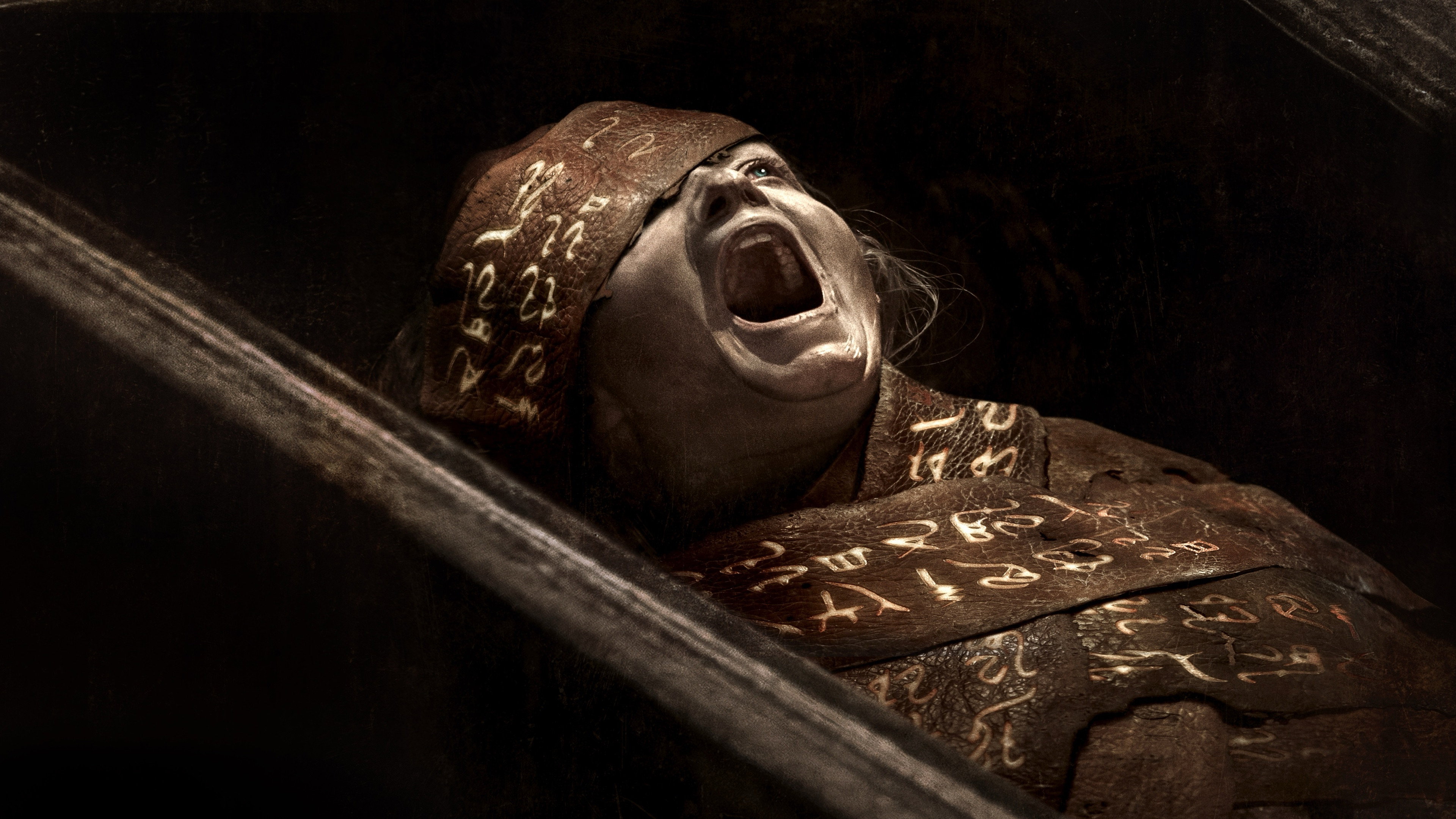
Lee Cronin's The Mummy
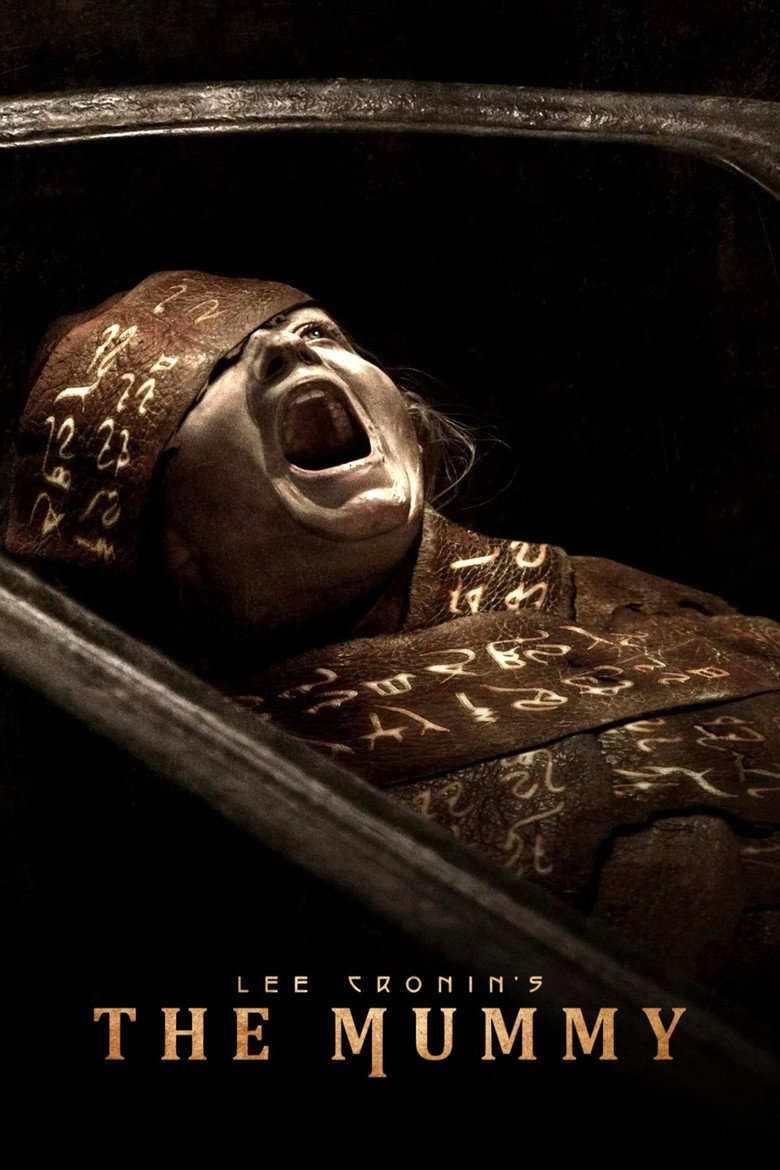
"The young daughter of a journalist disappears into the desert without a trace—eight years later, the broken family is shocked when she is returned to them, as what should be a joyful reunion turns into a living nightmare."
A Resurrection of Flesh and Grief: Analyzing Lee Cronin’s The Mummy
For decades, Universal’s The Mummy franchise has oscillated between the gothic romance of Karl Freund’s 1932 classic and the swashbuckling, CGI-laden escapades of the Stephen Sommers era. However, in his brilliant and deeply unsettling 2026 reimagining, director Lee Cronin (Evil Dead Rise, The Hole in the Ground) strips away the blockbuster spectacle to deliver a claustrophobic, psychologically devastating masterpiece. Released on April 15, 2026, Cronin’s The Mummy uses the framework of ancient curses to explore the agonizing anatomy of familial grief, maternal guilt, and the terrifying realization that some things are better left lost in the sands of time.
The film’s premise is deceptively simple yet laden with dread. Helen Vance (played with fierce, fragile intensity by Rebecca Hall), a seasoned investigative journalist, has spent eight years living in a state of suspended animation after her nine-year-old daughter, Maeve, vanished into the Mojave Desert during a family excursion. When Maeve suddenly reappears on the fringes of the desert—unchanged in height, silent, and carrying the dry, whispering scent of dust—the family’s desperate prayers seem answered. But as Maeve is reintegrated into their isolated suburban home, her presence begins to curdle. Cronin shifts the narrative from a miracle-recovery drama into a suffocating domestic nightmare, revealing that while the girl has returned, her body is merely a vessel for something ancient, desiccated, and hungry.
Thematic Architecture: The Mummification of Trauma
At the beating, rotting heart of Cronin’s film is the metaphor of mummification. Rather than focusing on linen wraps and sarcophagi, the screenplay (co-written by Cronin and David Rymer) conceptualizes mummification as the preservation of trauma. When a family experiences a loss as profound as a missing child, their lives become effectively embalmed; they are frozen in the exact moment of their tragedy, unable to decay naturally or move forward.
This thematic weight is explored through three distinct narrative layers:
- The Preservation of Guilt: Helen’s profession as a journalist is crucial. She is a woman who uncovers truths, yet she is entirely blind to the rot invading her own home. Her obsession with keeping Maeve’s bedroom exactly as it was for eight years acts as its own form of tomb-building.
- The Uncanny Return: When Maeve returns, she does not sweat, she barely sleeps, and her skin has a subtle, papery texture. Cronin uses this to examine the "uncanny valley" of parental grief. Helen is so desperate to have her daughter back that she actively ignores the biological anomalies, choosing a comforting lie over a terrifying truth.
- The Desert as an Eternal Void: Unlike previous iterations where Egypt serves as the exotic backdrop, the American Southwest desert in Cronin's film is an oppressive, silent antagonist. It is a place where time stops, acting as a natural dehydrator of both physical matter and human spirit.
By shifting the focus from archaeological greed to domestic denial, Cronin crafts a film where the real "monster" is not just the ancient entity inhabiting Maeve, but the maternal instinct twisted into a weapon of self-destruction.
Visual Language: The Cinematography of Aridity
Collaborating with cinematographer Stephen Murphy, Cronin establishes a visual palette that feels simultaneously dry and drowning. The film is captured in anamorphic widescreen, emphasizing the vast, indifferent emptiness of the desert landscapes, which contrast sharply with the tight, hyper-focused framing of the Vance household. Murphy employs a color spectrum dominated by amber, dusty ochre, and sickly, dehydrated yellows, making the audience feel as though they are inhaling sand with every frame.
The camera movement is deliberate and predatory. Murphy utilizes slow, creeping dollies that mimic an unseen observer navigating the hallways of the Vance home. This technique builds an unbearable sense of anticipation; the camera often lingers on empty corners or open doorways, suggesting that the domestic space has been permanently breached by the desert's ancient vacuum.
Lighting plays a pivotal role in signaling the supernatural rot. While the daytime scenes are overexposed and blindingly bright—highlighting the harsh reality Helen tries to escape—the interior night scenes are bathed in deep, oppressive shadows. The use of practical light sources, such as flickering bedside lamps and the cold hum of the refrigerator, casts long, distorted silhouettes on the walls, transforming the suburban home into an subterranean tomb. In one particularly terrifying sequence, Maeve stands motionless in the hallway as a dust storm rages outside; the strobe-like flashes of lightning illuminate her silhouette, briefly revealing the shifting, insectoid shadows dancing beneath her translucent skin.
Performances: The Anatomy of a Broken Reunion
The success of this intimate horror relies heavily on its cast, and the performances in The Mummy are nothing short of extraordinary. Rebecca Hall delivers a career-defining performance as Helen. Hall plays the character as a woman running on fumes, her eyes hollowed out by years of sleeplessness and false hope. When Maeve returns, Hall portrays a frantic, manic joy that slowly, agonizingly unravels into horror. The brilliance of her performance lies in the micro-expressions of denial—the way her smile falters when she touches her daughter’s cold skin, or the desperate, trembling excuses she makes to her husband when Maeve exhibits increasingly predatory behavior.
Opposite Hall, young actress Maya Thorne is a revelation as the returned Maeve. Playing a possessed child is a well-worn horror trope, but Thorne avoids the theatrical histrionics of her predecessors. Instead, she portrays Maeve with an eerie, static stillness. Her movements are slightly off-tempo, as if her limbs are being operated by a puppeteer unfamiliar with human anatomy. Thorne uses her eyes—unblinking and devoid of childhood warmth—to project an ancient, calculating intelligence that is deeply distressing to behold.
The supporting cast provides crucial emotional ballast:
- Steven Yeun (as Richard Vance): Richard represents the tragic voice of reason. Having spent eight years trying to grieve and move on, his reaction to Maeve’s return is not joy, but immediate, instinctual terror. Yeun plays the role with a quiet, heartbreaking pragmatism, serving as the audience's surrogate as he watches his wife descend back into madness.
- Amandla Stenberg (as Dr. Aris Thorne): As the forensic pathologist called in to examine Maeve, Stenberg brings a cold, clinical perspective that heightens the biological horror of Maeve's state, delivering terrifying monologues about cellular dehydration and ancient parasites with chilling composure.
Conclusion: A New Era for a Classic Monster
Lee Cronin’s The Mummy is a triumph of modern horror filmmaking. It proves that the most effective way to revitalize a classic monster franchise is not through larger explosions or interconnected cinematic universes, but by grounding the supernatural in visceral, human tragedy. By trading the golden sands of Giza for the dusty decay of a broken home, Cronin has constructed a film that is both a terrifying supernatural thriller and a devastating exploration of maternal grief. It is a film that lingers long after the credits roll, leaving the viewer with a lingering, suffocating sensation—like sand slowly filling the lungs.