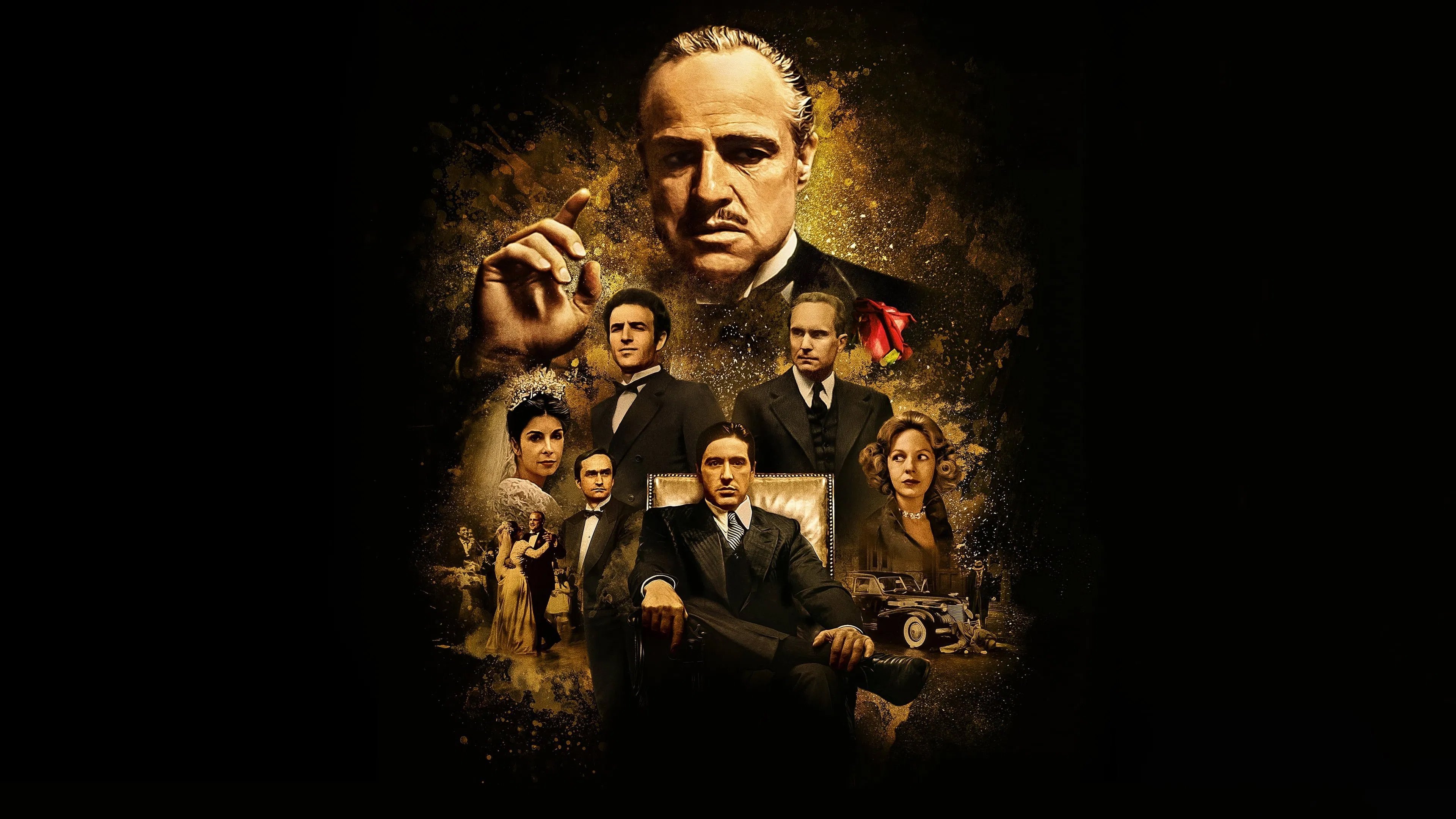
THE GODFATHER
Archive Entry No. 1972-PR
The Tragedy of Empire: A Retrospective on Francis Ford Coppola’s The Godfather
Released on March 14, 1972, Francis Ford Coppola’s The Godfather did not merely capture the cultural zeitgeist; it fundamentally restructured the landscape of American cinema. Arriving at the twilight of the New Hollywood renaissance, the film bridged the gap between classical studio storytelling and the gritty, auteur-driven realism of the 1970s. Spanning the post-war decade of 1945 to 1955, this chronicle of the Corleone family remains a towering achievement of narrative economy, psychological depth, and visual majesty. Fifty years later, it demands analysis not as a relic of a bygone golden age, but as a living, breathing text that continues to instruct and mesmerize.
The Perversion of the American Dream
At its intellectual core, The Godfather is a profound, deeply cynical deconstruction of the American Dream. Coppola, adapting Mario Puzo’s pulp novel, elevates the material to the level of Shakespearean tragedy. The film’s brilliant opening line, whispered in the dark by the undertaker Amerigo Bonasera—"I believe in America"—serves as the thematic thesis statement. What follows is a parallel study of capitalism and criminality, suggesting that the two are not antithetical, but rather mirror images of one another.
The narrative trajectory of Michael Corleone (Al Pacino) is the engine of this critique. Michael begins as the assimilated outsider, a decorated World War II hero who wishes to distance himself from his father’s illicit empire. His eventual descent into the moral abyss of the family business is not portrayed as a triumph, but as a spiritual death. By the time Michael orchestrates the baptism-day murders of his rivals, Coppola has laid bare the ultimate cost of power: the total erosion of the very family unit the empire was built to protect. The film posits that in the pursuit of absolute security, one must inevitably destroy their own humanity.
The Prince of Darkness: Gordon Willis’s Visual Legacy
Perhaps the most astonishing aspect of The Godfather today is how its cinematography continues to set the gold standard for cinematic lighting. Director of Photography Gordon Willis, famously dubbed the "Prince of Darkness," executed a visual strategy that was considered highly controversial by Paramount executives at the time, but has since become legendary.
Willis’s masterstroke was his uncompromising use of chiaroscuro—the dramatic contrast between light and shadow. In an era when studio films were brightly and evenly lit, Willis dared to plunge characters into near-total obscurity. The interior of Vito Corleone’s office is a cavern of warm, amber-hued darkness, symbolizing the insular, secretive world of the Mafia. This stands in stark, brilliant contrast to the overexposed, sun-drenched, pastel-colored wedding taking place just outside. This visual dichotomy immediately establishes the separation between the public facade and the private reality of power.
Furthermore, Willis’s decision to top-light Marlon Brando, frequently obscuring his eyes in shadow, was a revolutionary choice. It forced audiences to look closer, to read the physical gravity of the character through his posture and voice rather than his gaze. In the high-definition and 4K restoration era, this cinematography holds up spectacularly. It possesses a rich, painterly texture that digital filmmaking struggles to replicate, proving that shadow is often far more expressive than light.
An Enduring Monument of Modern Mythology
The legacy of The Godfather is woven into the very fabric of global popular culture. It rescued the gangster genre from the moralistic B-movie bin and elevated it to the status of national myth. Coppola’s masterpiece taught audiences to empathize with monsters, not by condoning their violence, but by humanizing their domestic lives. It is a film of quiet domesticity punctuated by shocking, operatic violence, establishing a rhythm that would influence everything from Goodfellas to The Sopranos.
Ultimately, the film endures because it is a flawless synthesis of form and content. Every frame, every shadow, and every line of dialogue serves the grand, tragic narrative of a family consuming itself from the inside out. It remains a definitive masterclass in filmmaking, a cinematic monument that time has only rendered more formidable.