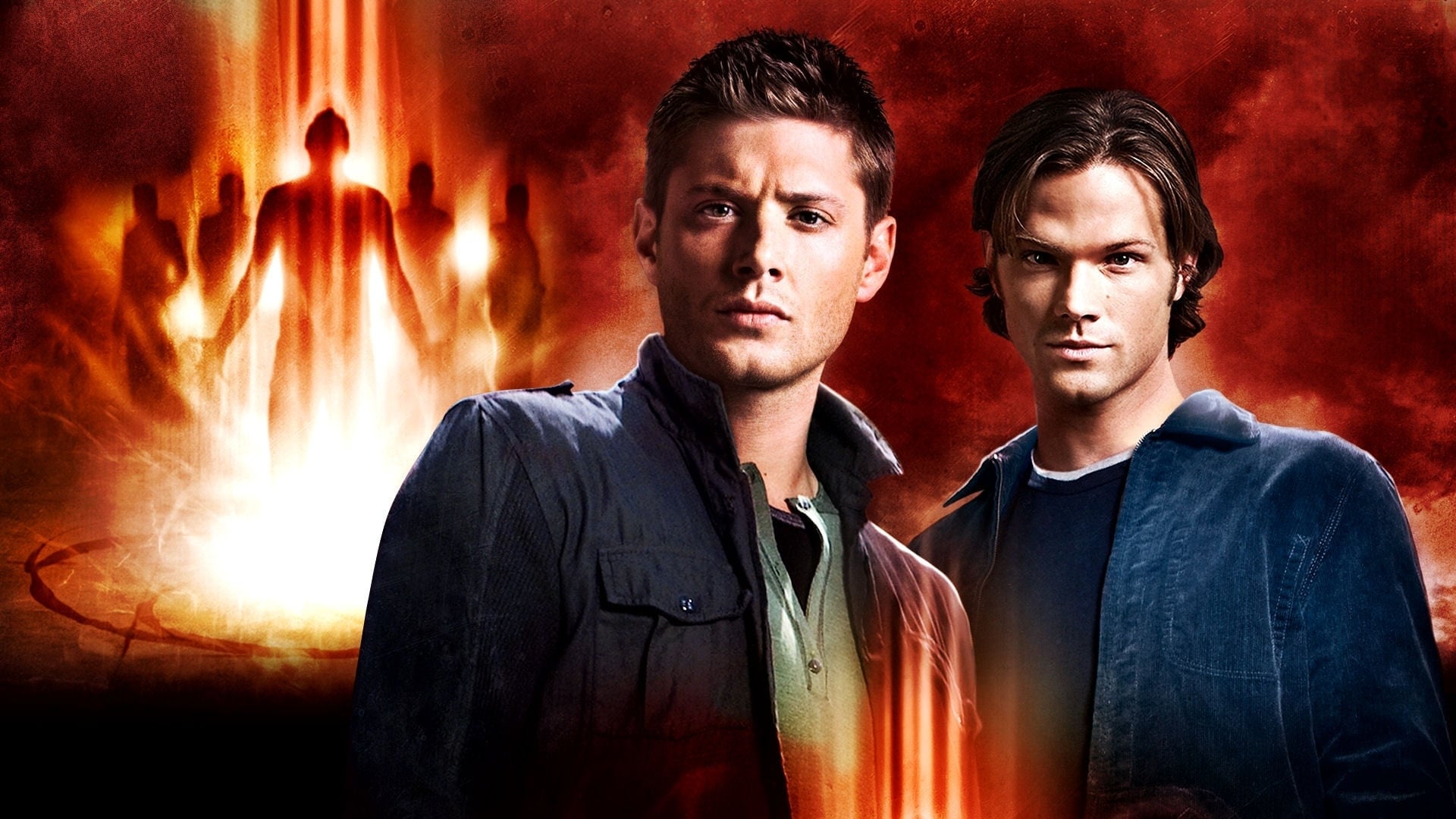
SUPERNATURAL
Archive Entry No. 2005-PR
The Gothic Roadtrip: Mythos, Masochism, and the Americana of Supernatural
Spanning an unprecedented fifteen seasons, Eric Kripke’s Supernatural stands as a monumental achievement in television history, transforming from a modest WB genre piece into a sprawling, modern American mythos. At its core, the series is a picaresque tragedy wrapped in the leather jacket of blue-collar Americana. It reimagines the vast, liminal spaces of the United States—its neon-lit motels, dilapidated barns, and endless asphalt—as a battleground where the mundane collides with the cosmic. To analyze Supernatural is to examine how a show successfully weaponized intimacy to sustain a fifteen-year-long epic.
The Blue-Collar Gothic: World-Building on the Back Roads
The world-building of Supernatural is defined by its "blue-collar gothic" aesthetic. Rather than staging its supernatural conflicts in gothic castles or sterile laboratories, the series roots its lore in the dirt of rural America. The Winchester brothers do not operate with high-tech gadgets or institutional backing; they hunt with salt, iron, and sawed-off shotguns, funded by credit card fraud. This democratization of the occult creates a visceral, tactile universe where ancient gods, demons, and angels are stripped of their celestial majesty and dragged down into the grime of dive bars and diner booths.
Crucial to this world-building is the 1967 Chevy Impala—the "Metallicar." More than a vehicle, the Impala serves as a mobile sanctuary, a domestic space for two brothers denied a home. By anchoring its vast mythology to the physical geography of the American highway, the series maintains a grounded reality. The lore is eclectic, seamlessly blending urban legends, folklore, and Judeo-Christian eschatology into a cohesive, albeit chaotic, theological framework where God is a capricious novelist and humanity is the ultimate underdog.
The Crucible of Brotherhood: Character Arcs and Codependency
The narrative engine is the psychological interplay between Sam and Dean Winchester. Their character arcs are masterclasses in tragic determinism and the struggle for autonomy. Dean Winchester begins as the dutiful soldier, his identity entirely subsumed by his father’s militaristic obsession. Over fifteen years, Dean’s arc is a painful deconstruction of toxic masculinity and parental indoctrination. He evolves from a cocky hunter into a weary, traumatized patriarch, perpetually torn between duty and his self-destructive martyrdom complex.
Conversely, Sam Winchester represents the reluctant apostate. His journey begins with a flight toward normalcy, only to be repeatedly dragged back into the family business by blood and destiny. Sam’s arc grapples with internal corruption—his literal and figurative addiction to demonic power—and the terrifying realization that he is destined to be the vessel for Lucifer. Together, their relationship is a profound study in codependency, where their love is both their greatest strength and their fatal flaw.
Pacing the Apocalypse: From Monster-of-the-Week to Cosmic Drama
The narrative pacing of Supernatural underwent a radical evolution. In its infancy, the show adhered to a strict "monster-of-the-week" procedural format, allowing the audience to acclimatize to the rules of the universe. However, the brilliance of the early seasons lies in how seamlessly these episodic hunts fed into a larger, serialized narrative. The pacing escalated with deliberate, agonizing tension, moving from a personal quest to find a missing father to a cosmic chess match between Michael and Lucifer.
Post-season five, the pacing faced the inevitable fatigue of a show that had already averted the Apocalypse. Yet, the series adapted by embracing a self-reflexive, meta-fictional pacing. It balanced high-stakes seasonal arcs with playful, avant-garde episodic departures, shifting between existential dread and camp humor without losing its emotional gravity.
Ultimately, Supernatural succeeded because it understood that no matter how grand the cosmic stakes became, the narrative must always return to the quiet conversations inside the Impala. It remains a landmark television achievement, proving that the most enduring monsters are not those lurking in the dark, but the ghosts of family legacy we carry within ourselves.