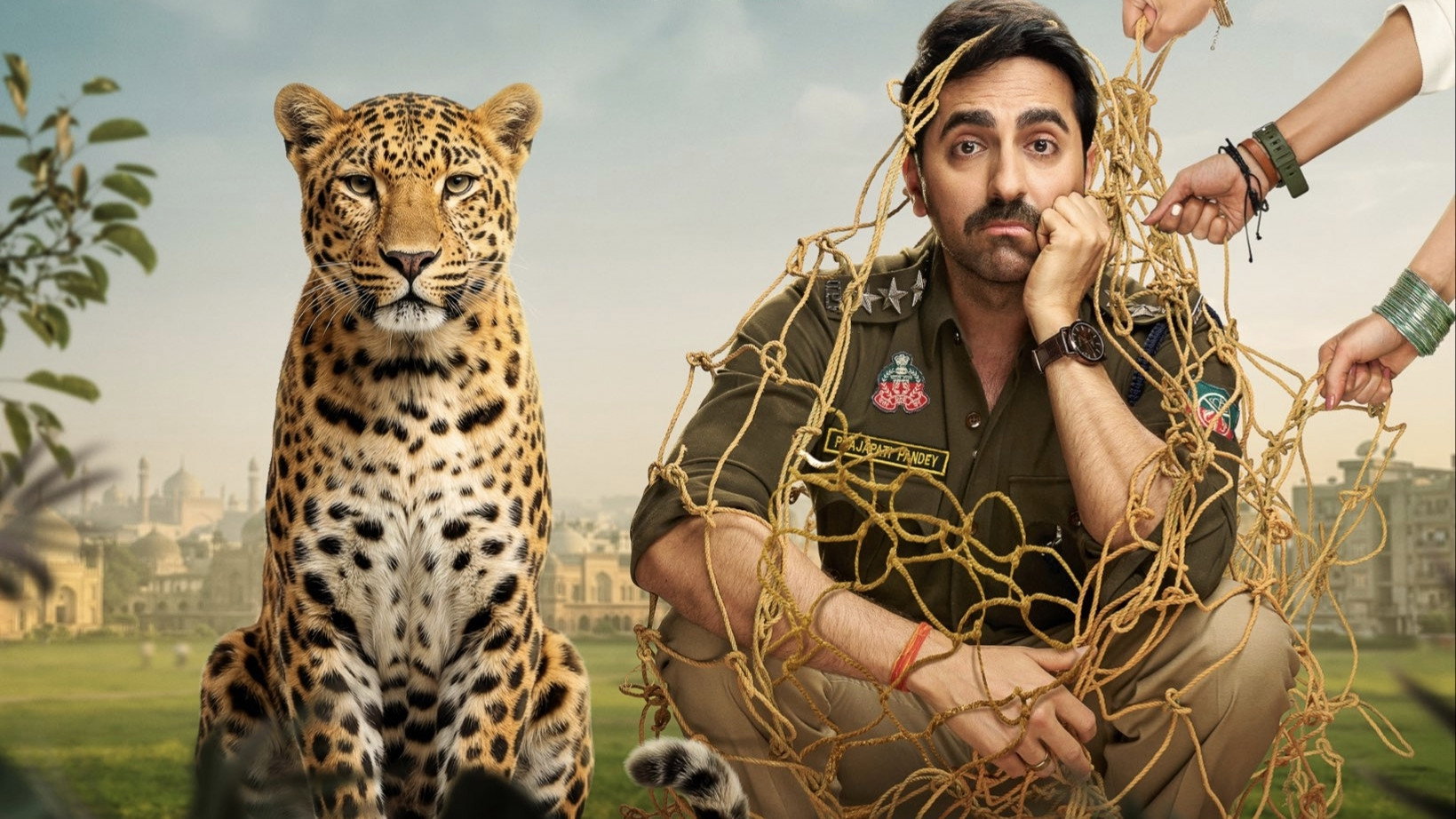
PATI PATNI AUR WOH DO
Archive Entry No. 2026-PR
The Multiplication of Discord: How 'Pati Patni Aur Woh Do' Redefines the Domestic Farce
In the landscape of contemporary Indian cinema, the domestic comedy has long served as a safe, if occasionally stagnant, mirror to societal norms. However, director Amit Sharma’s Pati Patni Aur Woh Do, released on May 15, 2026, subverts the comfortable tropes of marital discord to deliver something far more mercurial. Set against the transitional, hyper-local backdrop of Prayagraj, the film elevates the classic "husband, wife, and the other" triad into a dizzying, multi-layered exploration of modern anxiety, digital-age paranoia, and the fragility of the bourgeois dream.
A Cinematic Crucible of Tradition and Transience
Visually, the film is a masterclass in spatial irony. Cinematographer Avik Mukhopadhyay eschews the postcard-perfect, spiritualized imagery of Prayagraj in favor of a lived-in, claustrophobic reality. We see a city caught in the throes of rapid modernization—where ancient, colonial-era bungalows stand in the shadow of half-constructed flyovers and glowing fiber-optic cables. This visual dissonance mirrors the internal state of the protagonists.
The cinematic experience is defined by its pacing; the film moves with a frantic, almost anxiety-inducing momentum. Sharma utilizes long, unbroken tracking shots through the labyrinthine corridors of the family home, emphasizing how domestic spaces can transform from sanctuaries of intimacy into panoptic arenas of suspicion. The sound design complements this tension, juxtaposing the distant, soothing hum of the Ganges ghats with the incessant, jarring pings of smartphone notifications—the true catalyst of the film's impending chaos.
Performative Brilliance: The Anatomy of a Meltdown
At the heart of this comedic tempest are performances that ground the absurdity in painful human truth. The lead actor, portraying the beleaguered husband, delivers a performance of exquisite neuroticism. He embodies the modern Indian man—struggling to maintain the facade of patriarchal authority while utterly emasculated by his own insecurities. His comic timing lies not in slapstick, but in the micro-expressions of panic that flicker across his face as his carefully constructed lies unravel.
Opposite him, the actress playing his wife is the film’s emotional anchor. Rather than playing the victimized spouse of traditional farce, she brings a quiet, calculating intelligence to the screen. Her performance is a study in silent rebellion; she reclaims her agency not through explosive confrontation, but through a series of deliberate, chess-like maneuvers that keep both her husband and the audience guessing. The introduction of the "Do" (the two unexpected catalysts of suspicion) provides a brilliant foil, with the supporting cast playing their roles with a hyper-stylized energy that contrasts beautifully with the leads' grounded realism.
The Cultural Zeitgeist: Infidelity in the Algorithmic Age
What elevates Pati Patni Aur Woh Do from a mere comedy of errors into a significant cultural artifact is its profound understanding of relationships in 2026. In an era dominated by curated online personas, the film asks a vital question: who do we actually marry—the person sitting across from us, or the digital projection we have constructed of them?
By multiplying the "Woh" (the other) into "Woh Do," the narrative moves beyond the simplistic morality of physical infidelity. Instead, it interrogates the emotional and psychological infidelities facilitated by our hyper-connected lives. Prayagraj serves as the perfect crucible for this dialectic. It is a city where traditional family values are deeply entrenched, yet its youth are plugged into the global digital consciousness. The resulting friction is both hilarious and deeply tragic.
Conclusion: A Mirror to Our Fractured Selves
Ultimately, Pati Patni Aur Woh Do is a triumph of satirical filmmaking. It manages to be relentlessly entertaining while offering a sophisticated critique of contemporary middle-class anxieties. By the time the final, chaotic crescendo resolves, the audience is left laughing, but with a lingering sense of unease. It is a definitive cinematic portrait of our times—a reminder that in the modern marriage, the greatest threat is often not a third party, but the ghosts we invite into our lives through our own screens.