PARASITE
Archive Entry No. 2019-PR
The Architecture of Complicity: A Retrospective on Bong Joon-ho’s Parasite
When Bong Joon-ho’s Parasite premiered in May 2019, it did not merely capture the cultural zeitgeist; it shattered the geopolitical boundaries of contemporary cinema. As the first non-English language film to win the Academy Award for Best Picture, alongside the prestigious Palme d’Or, its historic triumph signaled a paradigm shift in global film reception. Half a decade later, the film’s legacy has only solidified. It stands not as a fleeting political novelty, but as a towering masterpiece of formal precision, dark satire, and tragic realism that continues to provoke, entertain, and devastate.
The Architecture of Inequality: Enduring Themes
At the heart of Parasite’s enduring resonance is its sophisticated dissection of late-stage capitalism. Bong Joon-ho eschews the didacticism of traditional class-struggle narratives, opting instead for a darkly comic, Shakespearean tragedy of mutual exploitation. The film posits that under the pressure of systemic inequality, solidarity among the marginalized is eroded. The Kims and the Parks are locked in a symbiotic, yet ultimately parasitic, dance where the wealthy commodify the labor and "smell" of the poor, while the impoverished must cannibalize each other just to secure a foothold in the sun.
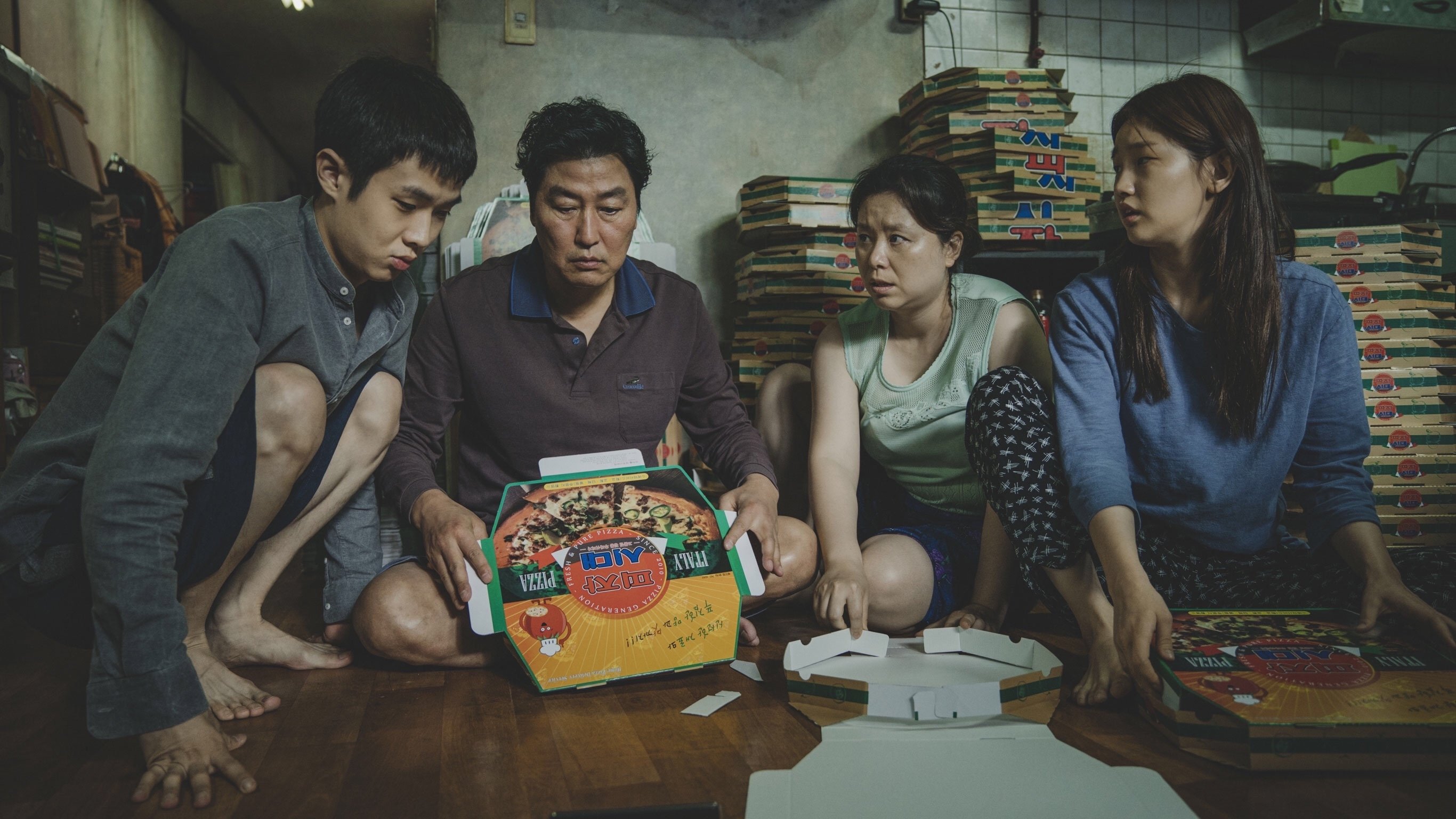
The thematic brilliance of the film lies in its spatial metaphors. The Kims' semi-basement apartment, or banjiha, represents a liminal socioeconomic existence—suspended between the subterranean depths of absolute destitution and the aspirational heights of the bourgeoisie. Bong’s critique is devastatingly precise: the tragedy is not that the underclass wishes to overthrow the system, but that they are utterly seduced by it. The heartbreaking final sequence, wherein Ki-woo dreams of purchasing the Park estate to free his father, underscores the cruel illusion of upward mobility in a rigged meritocracy.
Visual Geography: How the Cinematography Holds Up Today
To analyze Parasite is to analyze its immaculate visual grammar, orchestrated by director of photography Hong Kyung-pyo. Five years on, the film’s cinematography remains a masterclass in spatial storytelling and psychological projection. Hong’s camera does not merely observe; it actively enforces the social stratification of the narrative. The cinematography is governed by a strict geometry of verticality and division.
Throughout the film, characters are constantly framed by architectural lines—glass panels, door frames, and staircases—that visually demarcate their class boundaries. The Parks and their servants frequently occupy the same frame, yet they are subtly separated by these vertical lines, emphasizing an invisible but impenetrable barrier. The legendary sequence of the Kims escaping the Park mansion during a torrential downpour is a cinematic tour de force of vertical descent. Hong captures their journey down endless flights of stairs, through tunnels, and into the flooded lowlands of Seoul, visually articulating the inescapable gravity of their social station.
Furthermore, the lighting design contrasts the two worlds with painterly precision. The Park residence is bathed in warm, natural, golden sunlight, filtering through massive glass windows that frame the world as a curated gallery. Conversely, the Kims' world is illuminated by the sickly, artificial green of fluorescent bulbs and the erratic glare of streetlights. This sophisticated manipulation of light and shadow ensures that the film’s socio-political subtext is felt viscerally in every frame.
A Watershed Legacy
Parasite’s legacy extends far beyond its trophy cabinet. By dismantling what Bong famously termed the "one-inch barrier of subtitles," the film catalyzed a democratization of taste for Western audiences, paving the way for international stories to be received not as niche "foreign art house" fare, but as mainstream cultural events. It proved that highly localized Korean specificities—such as jjapaguri or the cultural anxieties of the 38th parallel—could translate into a universal human truth. Today, Parasite remains a flawless synthesis of high-art formalism and popular entertainment, a cinematic monument that continues to reflect our fractured world back at us with terrifying clarity.