LEE CRONIN'S THE MUMMY
Archive Entry No. 2026-PR
The Dry Rot of Grief: Lee Cronin’s Radical Reimagining of The Mummy
In the annals of cinematic resurrection, the mummy has long been shackled to the pulp exoticism of the 1930s and the CGI-laden blockbusters of the late 1990s. Lee Cronin’s The Mummy, however, violently strips away the gold leaf, the scarabs, and the romanticized curses of antiquity. Instead, Cronin delivers a devastating, somatic masterpiece that redefines the "mummy" not as a bandaged pharaoh rising from a sarcophagus, but as the calcified, terrifying manifestation of unresolved familial grief. It is a film that understands that the most frightening thing about the dead returning is not that they are gone, but that they are no longer who we remember.
The Prodigal Corpse: Subverting the Return
The narrative engine of Cronin’s film is deceptively simple, yet psychologically lacerating. Eight years after the young daughter of an investigative journalist vanishes into the oppressive, sun-bleached expanse of the desert, she returns. But this is no miracle. When Maeve steps back into her family’s life, she is a vessel of the uncanny. Cronin, whose previous works (The Hole in the Ground, Evil Dead Rise) masterfully dissected the rot of maternal and domestic bonds, uses this reunion to explore the horror of getting exactly what you prayed for.
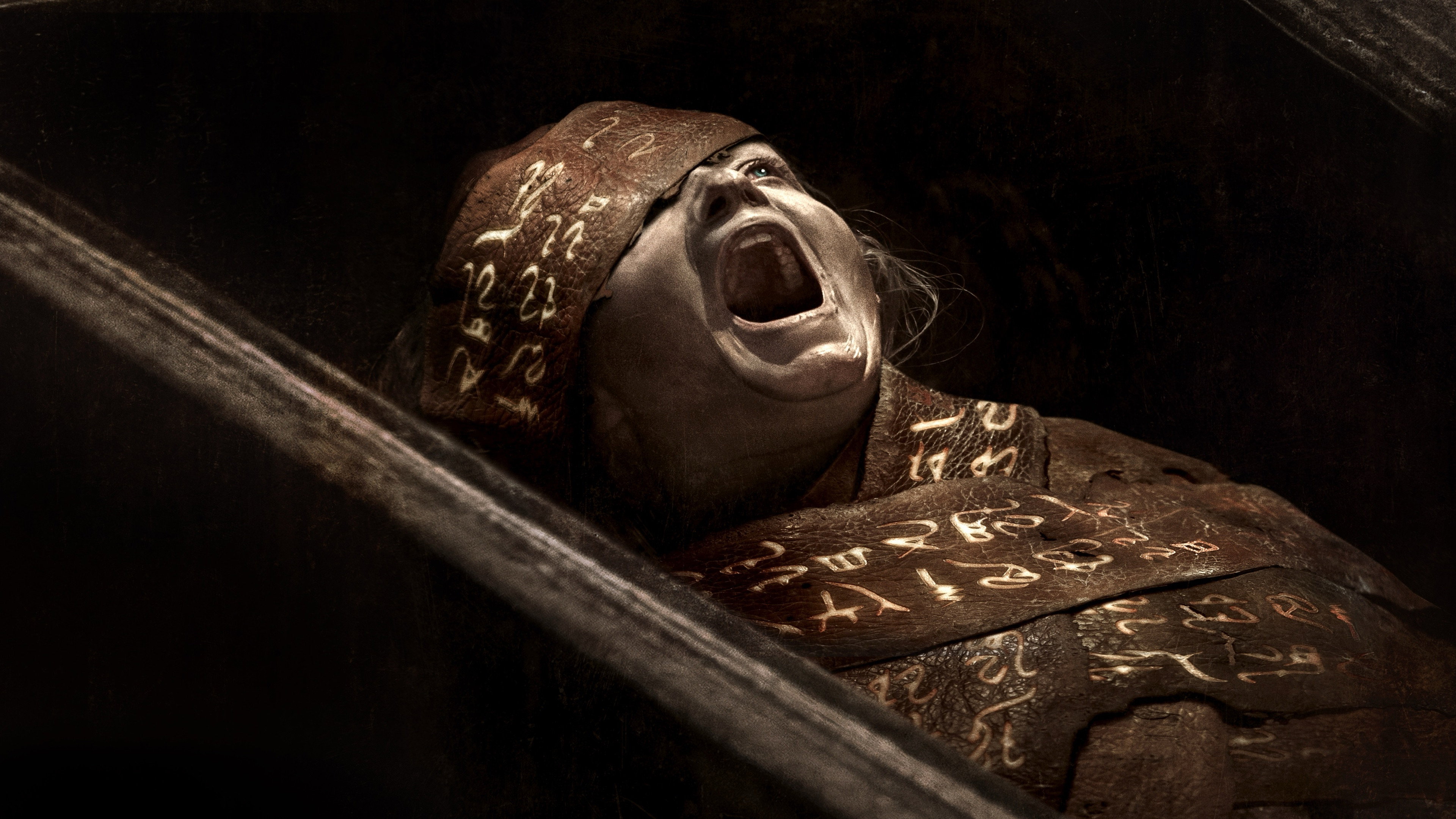
Maeve is physically present, yet she is emotionally and biologically "preserved"—frozen in a state of arrested development that feels less like youth and more like taxidermy. Her skin possesses a papery, desiccated quality; her movements are agonizingly deliberate, mimicking the dry, shifting geometry of the dunes that claimed her. The brilliance of Cronin’s direction lies in how he frames this "mummification." The bandages here are metaphorical—woven from the family's desperate denial, their refusal to see that the child they lost has been replaced by something ancient, hollowed out, and hungry.
Arid Textures and the Claustrophobia of Wide Spaces
Visually, the film is a triumph of sensory discomfort. Working with cinematographer Tom Elkins, Cronin contrasts the blinding, overexposed white-hot terror of the desert with the suffocating, shadow-drenched interior of the family home. The desert is not just a setting; it is an active, malevolent deity that has digested the child and spat back a husk.
The sound design is equally visceral. The film eschews bombastic orchestral swells in favor of a dry, scratching intimacy:
- The sound of sand shifting behind drywall.
- The unnatural, papery rustle of Maeve’s breath in the dark.
- The low, rhythmic hum of the desert wind that seems to emanate from the girl’s own throat.
The Metaphysics of Preservation
At its core, Cronin’s The Mummy is an intellectual deconstruction of the preservation instinct. The journalist father, a man whose career is built on unearthing truths, becomes the tragic architect of his own doom as he refuses to investigate the anomaly of his returned daughter. To accept her as she is requires a form of emotional self-mummification—a willingness to wrap one's own mind in layers of delusion.
The film’s climax is a masterclass in domestic body horror. As Maeve’s true, parasitic nature begins to bleed through her fragile facade, the film morphs into a devastating allegory for the parasitic nature of trauma. The family home becomes a tomb, not of stone and gold, but of dust, regret, and flesh. Cronin posits that grief is the ultimate preservation fluid; it keeps us bound to the dead until we are as lifeless as they are.
Conclusion
Lee Cronin’s The Mummy is a bleak, brilliant triumph of modern horror. By stripping the franchise of its adventure-serial trappings and transplanting its core mythology into the fertile, rotting soil of domestic tragedy, Cronin has crafted a film that is both intellectually rigorous and deeply, physically unsettling. It is a haunting reminder that some things are buried for a reason, and that the desert never returns what it takes without demanding a soul in exchange.