FROM
Archive Entry No. 2022-PR
The Architecture of Liminal Terror: A Critical Anatomy of FROM
In the saturated landscape of contemporary speculative television, John Griffin’s FROM emerges not merely as a survivalist horror, but as a profound meditation on existential entrapment. On its surface, the series inherits the DNA of "mystery box" predecessors like Lost and Twin Peaks. Yet, FROM distinguishes itself by weaponizing the mundane, transforming a decaying, inescapable Middle American town into a crucible of psychological and supernatural torment. It is a series that understands that the truest horror lies not in the monsters under the bed, but in the realization that the bed itself has been relocated to an infinite, hostile void.
The Topography of the Nightmare: World-Building as Existential Trap
The world-building of FROM is a masterclass in spatial claustrophobia and ontological dread. The town is not merely a setting; it is an active antagonist, a sentient labyrinth governed by a perverse set of physical laws. Griffin and his creative team construct a space where the familiar becomes uncanny: electricity flows through hollow, copperless wires, and roads bend back upon themselves in a cruel, Mobius-strip geometry. The introduction of the stone talismans establishes a fragile, domestic boundary between life and gruesome death, creating a brilliant thematic tension between the public sphere of survival and the private sanctuary of the home. Furthermore, the societal bifurcation of the town—the rigid, institutional order of the Township led by Boyd Stevens, versus the bohemian, hedonistic communalism of Colony House—serves as a compelling sociological experiment. It asks how humanity organizes itself when stripped of history, future, and agency.
The Anatomy of Ruin: Character Arcs and the Weight of Trauma
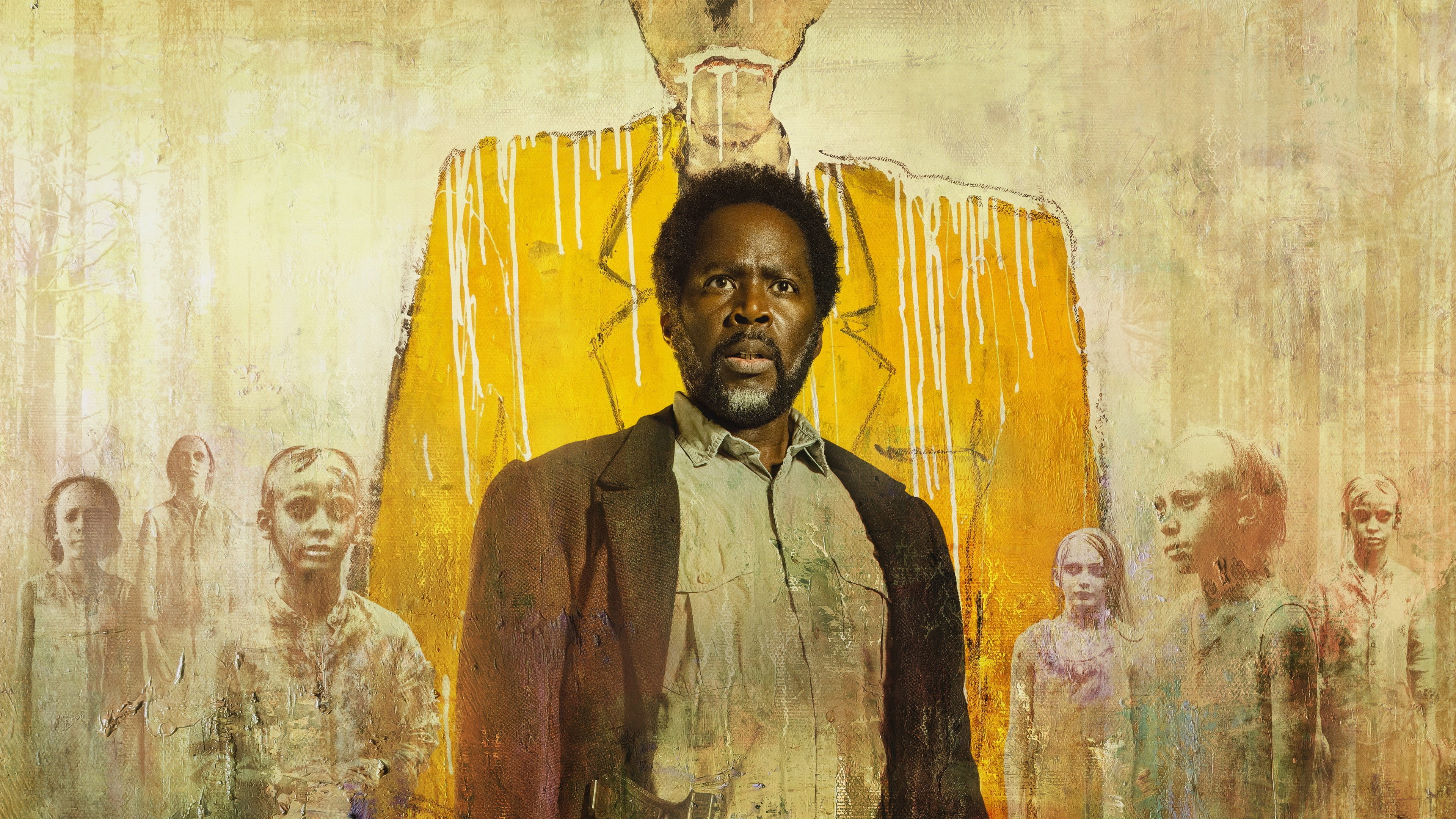
What elevates FROM above standard genre fare is its refusal to let its characters be defined solely by their utility to the plot. Instead, the characters’ internal fractures mirror the broken world they inhabit. Boyd Stevens, portrayed with a raw, kinetic desperation by Harold Perrineau, is a modern Sisyphus. His arc is defined by the crushing weight of leadership and the slow erosion of his physical and mental faculties; his battle with Parkinson’s disease and mysterious blood-borne infections serves as a visceral metaphor for the town’s rot. Similarly, the Matthews family represents the disintegration of the nuclear unit, their arrival in the town acting as a physical manifestation of their unresolved grief over a lost child. Particularly fascinating is Victor, the town’s longest-surviving resident, whose arrested development and childlike drawings serve as both a historical archive of the town's atrocities and a tragic testament to what prolonged isolation does to the human psyche. These characters are not merely trying to escape a physical space; they are attempting to outrun their own psychological ruins.
The Hermeneutic Drip: Narrative Pacing and the Mastery of Tension
Critically, the narrative pacing of FROM operates on a dual-register system that is both agonizing and addictive. The series employs a slow-burn hermeneutic pacing, rationing answers with a calculated parsimony that risks frustrating the viewer but ultimately heightens the sense of cosmic helplessness. Each episode is structured around the inexorable transition from day to night—a temporal ticking clock that regulates the narrative tension. The daylight hours are filled with frantic, often futile intellectual labor as characters like the arrogant tech-mogul Jade attempt to decode the town’s symbols. The night, conversely, belongs to visceral, slow-moving terror. By pacing the narrative around this diurnal rhythm, the show prevents its mythology from collapsing under its own weight, ensuring that every small revelation feels hard-won and terrifyingly fragile.
Conclusion
Ultimately, FROM succeeds because it understands that the journey through the labyrinth is far more compelling than the promise of an exit. Through meticulous world-building, deeply fractured character studies, and a pacing strategy that treats information as a scarce commodity, the series establishes itself as a premier work of modern television horror—one that forces us to look into the dark and wonder if we, too, are already trapped.