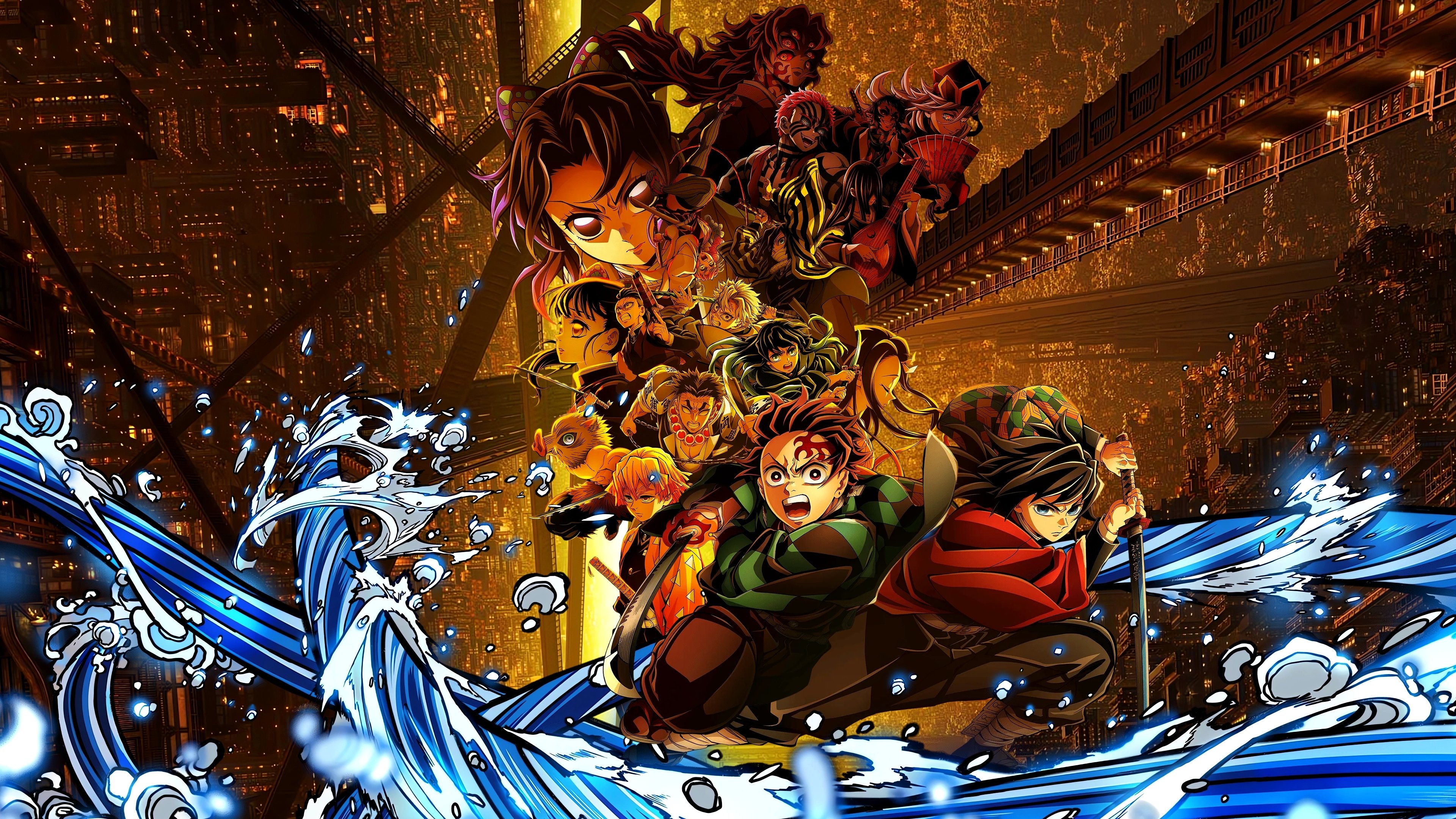
DEMON SLAYER: KIMETSU NO YAIBA INFINITY CASTLE
Archive Entry No. 2025-PR
The Architecture of Anticipation: Analyzing the Cinematic Horizon of "Infinity Castle"
When Demon Slayer: Kimetsu no Yaiba Infinity Castle arrives in theaters on July 18, 2025, it will not merely be a theatrical release; it will be a cultural event of seismic proportions. Following the historic box-office triumph of Mugen Train, the franchise has transcended the boundaries of traditional anime to become a vanguard of global cinema. The upcoming adaptation of the "Infinity Castle" arc represents the zenith of this trajectory, promising a synthesis of avant-garde animation and classical tragic narrative. As a subject of critical anticipation, the film demands an analysis that looks beyond mere hype, examining how its spatial geometry, thematic depth, and industry impact will redefine the medium.
Visual Geometry and the Spatialization of Dread
The primary expectation surrounding Infinity Castle lies in its titular setting—a non-Euclidean, gravity-defying labyrinth controlled by the demon Nakime. For studio Ufotable, this environment is a canvas for unprecedented technical ambition. The integration of 3D digital environments with hand-drawn 2D character animation has long been the studio's signature, but the Infinity Castle demands a radical expansion of this technique. Audiences should anticipate a dizzying, claustrophobic spectacle where the camera operates with fluid, architectural freedom. The shifting planes of the castle will serve as a physical manifestation of psychological disorientation, forcing the protagonists—and the audience—to navigate a space where traditional coordinates of safety and direction are entirely erased. This is not merely action choreography; it is the spatialization of dread.
Redefining the Shōnen Paradigm and Theatrical Distribution
From an industry perspective, Demon Slayer: Kimetsu no Yaiba Infinity Castle is poised to solidify a paradigm shift in how long-form anime narratives are consumed. By bypassing the traditional television format for its climactic battle, the franchise asserts that high-caliber shōnen action is best experienced through the communal, high-fidelity medium of cinema. This strategy elevates the narrative stakes, transforming episodic combat into a grand, operatic saga. Furthermore, the film’s release will likely push the boundaries of action cinema. The anticipated confrontations between the Hashira and the Upper Rank demons are not merely physical duels; they are kinetic poetry. By treating action as a primary vehicle for character development and philosophical clash, the film will challenge both domestic and international action cinema to match its expressive dynamism and emotional weight.
Thematic Resonance: Mortality, Legacy, and the Labyrinth
Thematically, the "Infinity Castle" arc operates as a crucible for the series' core philosophical inquiry: the value of transient human life versus the stagnation of monstrous immortality. Muzan Kibutsuji’s domain is a monument to ego and self-preservation, a sterile fortress designed to keep death at bay. In contrast, the Demon Slayer Corps represents the beauty of the ephemeral. The Hashira, fully aware of their mortality, enter this labyrinth not expecting survival, but seeking to pass the torch of humanity to the next generation. This clash of ideologies elevates the narrative from a simple good-versus-evil dichotomy to a profound meditation on legacy. Tanjiro and Nezuko’s journey through this underworld becomes a mythic descent, where the preservation of empathy in the face of absolute horror is the ultimate victory. The film will undoubtedly explore the heavy psychological toll of this crusade, transforming the physical wounds of its characters into scars of generational trauma and resilience.
A Monument on the Horizon
Ultimately, Demon Slayer: Kimetsu no Yaiba Infinity Castle stands as one of the most significant cinematic prospects of 2025. It represents a rare convergence of commercial dominance and artistic ambition. By merging cutting-edge digital craftsmanship with a deeply humanistic narrative core, the film is set to transcend its genre origins, offering a masterclass in tension, visual storytelling, and thematic resolution. For analysts and audiences alike, the descent into the castle is not just an expectation of spectacular violence, but an anticipation of a landmark moment in contemporary animation history.