BACKROOMS
Archive Entry No. 2026-PR
Anticipation Analysis: *Backrooms* (2026) — The Architecture of Existential Dread
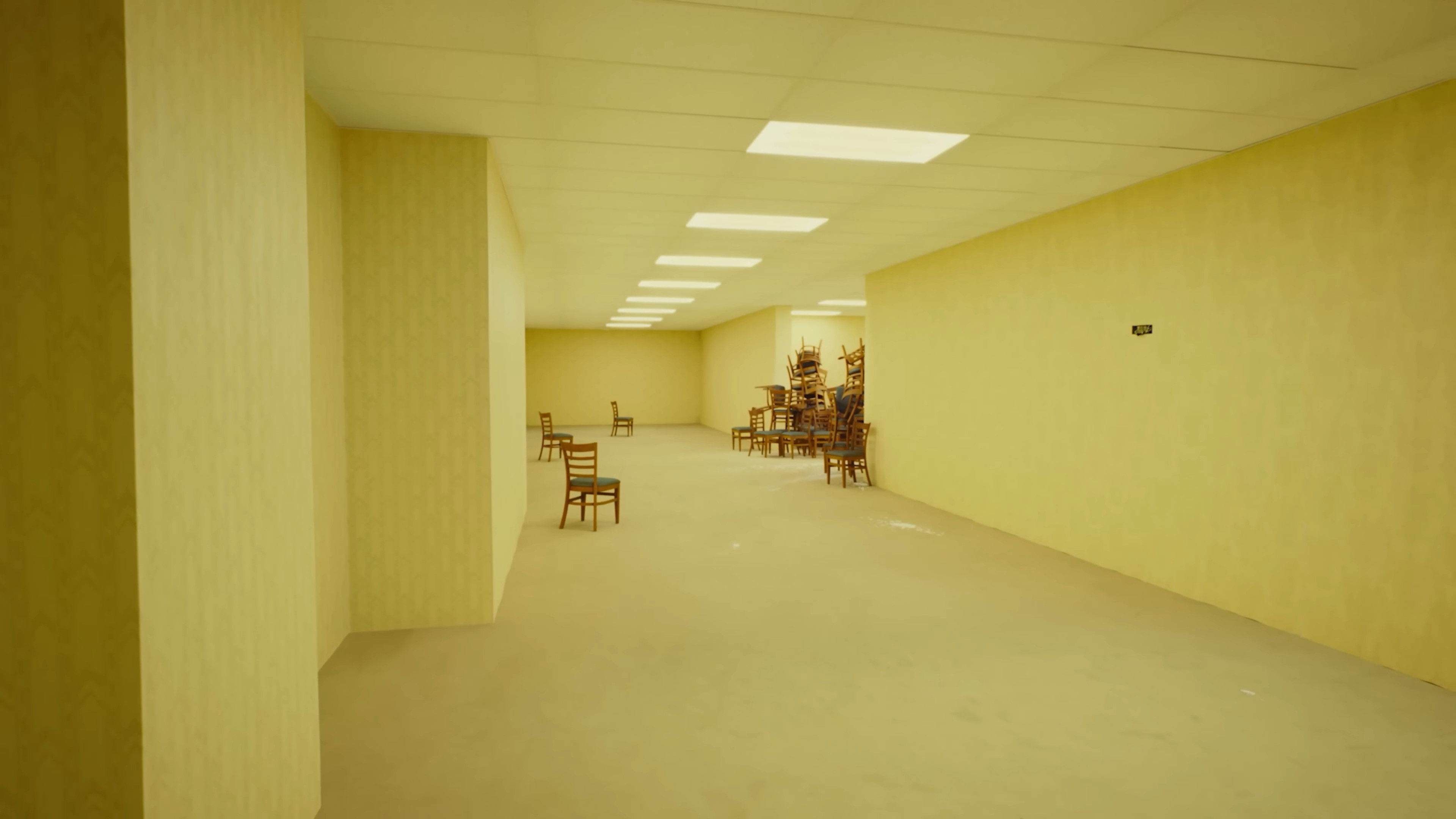
The announcement of Backrooms, scheduled for release on May 27, 2026, marks a highly anticipated cultural inflection point. What began as a viral internet phenomenon—a collective digital mythos centered on yellowed, fluorescent-lit, non-Euclidean office spaces—is poised to receive a definitive cinematic translation. By anchoring its premise in a deceptively mundane location—a strange doorway appearing in the basement of a furniture showroom—the film promises to elevate internet-born "liminal space" horror into a sophisticated, theatrical exploration of spatial alienation and psychological collapse.
The Spatial Uncanny: From Consumerism to the Void
The choice of a furniture showroom as the film’s threshold is a stroke of thematic genius. A showroom is, by definition, a simulacrum of domesticity. It presents curated, uninhabited stages of kitchens, bedrooms, and living rooms designed to sell the illusion of comfort and security. It is a space that mimics life but lacks soul. By placing the portal to the Backrooms in the basement of such an establishment, the narrative establishes a brilliant dichotomy.
The characters will likely transition from a space of hyper-managed consumer comfort into an infinite, unmanaged purgatory. The basement doorway represents a rupture in the capitalist facade, dragging characters—and the audience—beneath the surface of constructed reality into a sterile, endless labyrinth. This setup suggests the film will deconstruct our relationship with the spaces we inhabit, suggesting that our modern, mass-produced environments are only a step away from cosmic emptiness.
Genre Impact: Redefining Modern Horror
For the past decade, cinematic horror has oscillated between the metaphor-heavy "elevated horror" of grief and trauma, and the visceral thrills of supernatural franchises. Backrooms has the potential to pioneer a third way: architectural dread. This subgenre relies less on traditional antagonists or jump scares and more on the concept of *kenopsia*—the eerie, depressing atmosphere of a place that is usually bustling with people but is now abandoned and quiet.
If executed with the intellectual rigor it invites, the film will challenge traditional narrative structures. In a space defined by infinite repetition and the absence of horizon lines, conventional concepts of escape, progression, and climax are rendered useless. The impact on the genre could be profound, shifting the focus of cinematic terror from "what is hiding in the dark" to "what happens when the light is always on, and there is nowhere left to go." It demands a cinematography style that emphasizes oppressive symmetry, hum-induced sensory deprivation, and the terrifying vastness of empty geometry.
Thematic Resonance: The Terror of the Infinite
At its core, the premise of Backrooms taps into deep-seated contemporary anxieties. In an era dominated by digital existence, virtual landscapes, and a growing sense of isolation, the film’s themes of being "clipped" out of reality speak to a collective dissociation. The infinite, yellow-walled corridors symbolize a modern purgatory—a physical manifestation of bureaucratic monotony and existential stagnation.
We can expect the film to explore the breakdown of human psyche when stripped of external reference points. Without day, night, or natural landmarks, time becomes meaningless. The characters' descent will likely mirror a psychological unraveling, where the threat is not merely whatever entities might lurk in the shadows, but the mind’s inability to cope with absolute, meaningless infinity. It is a contemporary update to the myth of the labyrinth, where the Minotaur is less terrifying than the maze itself.
Concluding Outlook
As we look toward the May 2026 release, expectations for Backrooms are exceptionally high. It carries the weight of proving that digital folklore can sustain a high-art, feature-length cinematic narrative. If the filmmakers successfully leverage the transition from the curated domesticity of the furniture showroom to the chaotic infinity of the yellow void, this film will not only terrify audiences but will also redefine the visual and thematic vocabulary of psychological horror for the late 2020s.